BAUMA CONEXPO INDIA 2026 brings together leading construction equipment manufacturers, machinery specialists and technology companies. Here’s what to expect, which exhibitors to watch and the machines and innovations likely to dominate the show.

BAUMA CONEXPO INDIA 2026 brings together leading construction equipment manufacturers, machinery specialists and technology companies. Here’s what to expect, which exhibitors to watch and the machines and innovations likely to dominate the show.
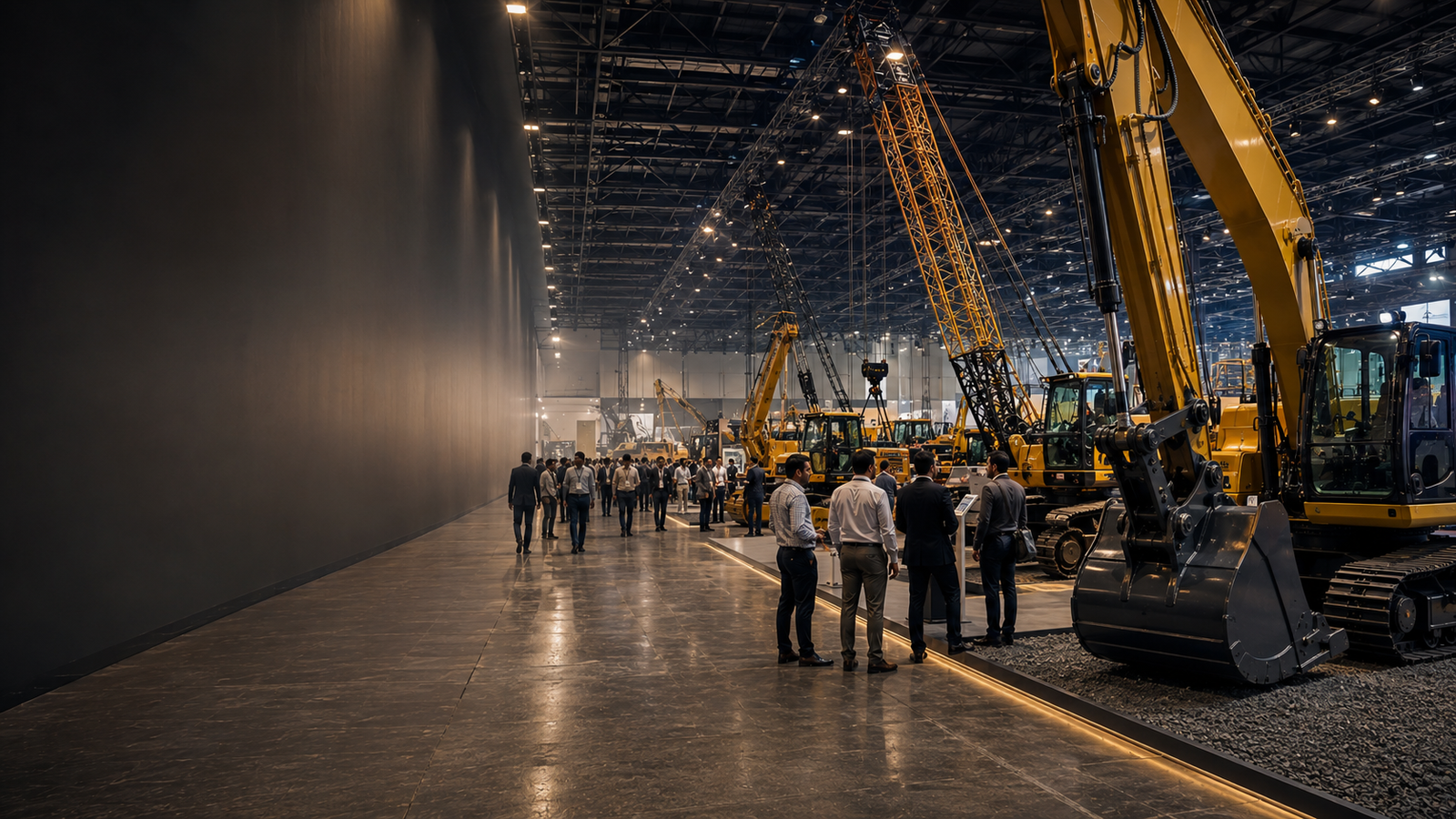
BAUMA CONEXPO INDIA 2026 is the eighth edition of India’s largest trade fair dedicated to construction machinery, building material machines, mining equipment and construction vehicles. It’s jointly organised by Messe München — the company behind the flagship bauma show in Munich and bauma CHINA — and the Association of Equipment Manufacturers (AEM), which runs CONEXPO-CON/AGG in the US. That pairing matters: it’s part of what keeps the show credible with international OEMs rather than letting it drift into a purely domestic trade event.
The show runs on a two-year cycle, and the last edition, held in December 2024, drew 984 exhibitors from 30 countries and 51,118 participants from 83 countries across roughly 135,000 square metres of exhibition space, according to Messe München’s official figures. Those numbers are the benchmark the 2026 edition will be judged against, and given the exhibitor list has already grown to cover a full 17 halls plus outdoor demonstration space, there’s little reason to expect a smaller show.
The exhibitor list, updated by the organiser in late August 2026, spans a wider range of sectors than the show’s name suggests. Beyond the earthmoving and heavy-equipment OEMs, expect a heavy presence from:
For buyers, this breadth is the real value of the show: it’s less a single-purpose OEM launch event and more a working map of the entire Indian construction supply chain in one building.
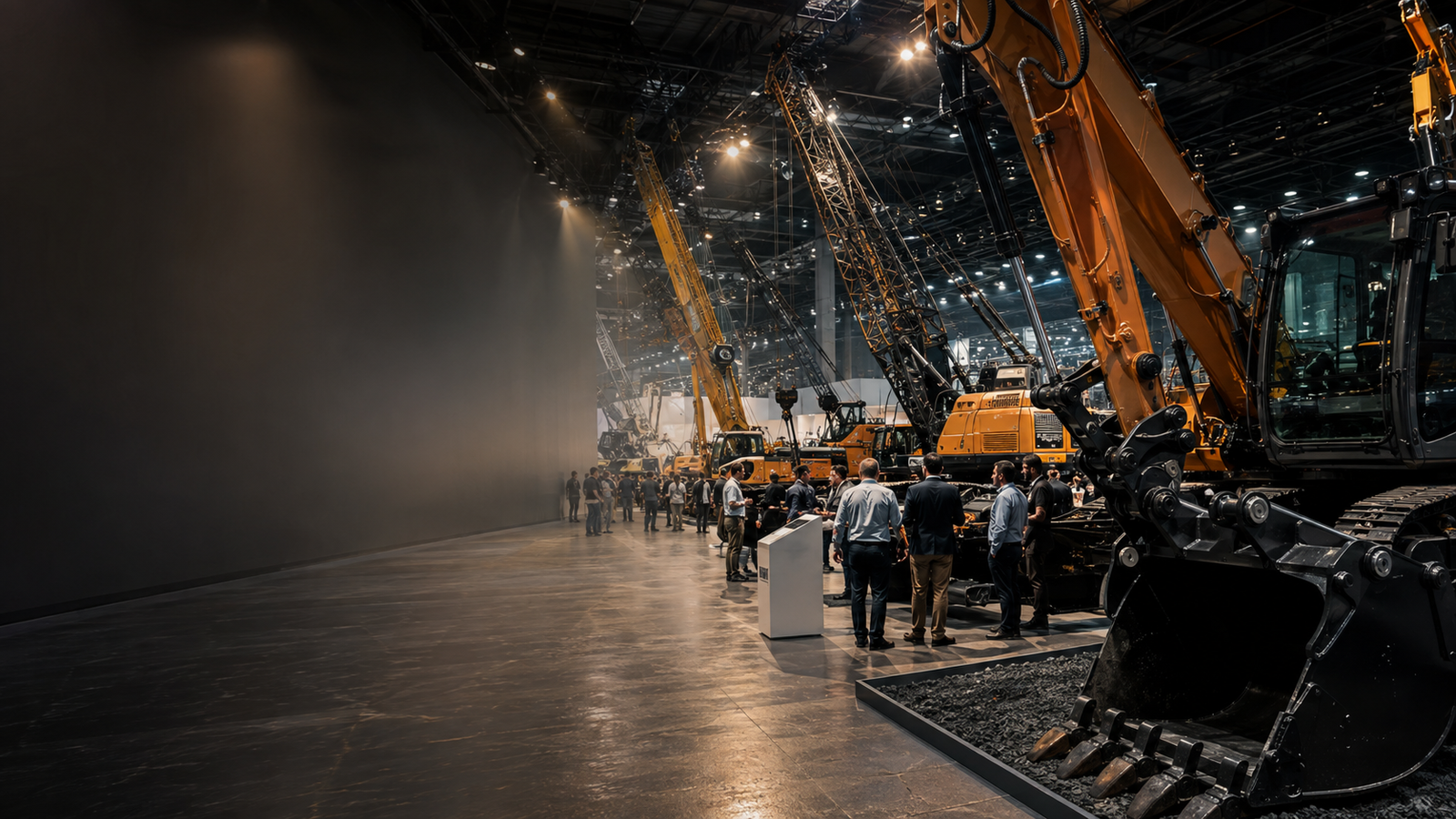
Expect the outdoor demonstration zone — marked “O” on the hall map — to carry the machines most visitors come for: excavators, wheel loaders, backhoe loaders, motor graders, compactors, cranes and dump trucks from JCB, Volvo CE, Komatsu, Liebherr, Caterpillar, Tata Hitachi, Sany, Zoomlion, Terex, LiuGong, Doosan Bobcat, Ammann, Escorts Kubota, Tadano and Action Construction Equipment, among others. This is where OEMs run live demos rather than just displaying static units, so it’s worth timing your visit around published demo schedules rather than just walking the aisles.
Indoors, the equipment gets more specialised: piling and geotechnical rigs from Bauer, Casagrande and Herrenknecht; tunnelling equipment from Robbins; crushing and screening plant from Propel Industries, Astec and Puzzolana; concrete batching and mixing equipment from Schwing Stetter, Putzmeister, Simem and Sicoma; and road construction machinery from Wirtgen and Ammann. If your interest is niche — say, tunnel boring or precast concrete systems — the indoor halls are where the actual engineering conversations happen, away from the noise of the outdoor demo area.
Three themes look set to dominate the floor conversation this year, based on exhibitor messaging and product positioning ahead of the show.
Total cost of ownership over horsepower. Fewer OEMs are leading with raw output specs; more are leading with fuel burn, uptime, and service interval data. That shift tracks with what Equipment Brief has seen at other regional shows this cycle — buyers are pricing in operating cost more aggressively than they were even two years ago, particularly with fuel and financing costs both elevated.
Electrification, but selectively. Battery-electric and hybrid options are visible, but concentrated in categories where charging logistics are less of a constraint — compact loaders, access equipment and material handling — rather than in full-size excavators or heavy cranes. That’s a realistic reflection of India’s charging infrastructure outside major metro construction sites, not a marketing gap.
Chinese manufacturing depth. Halls 5 and 7 in particular carry a long list of Chinese hydraulic, crane, mixer and component manufacturers. Whether or not you’re sourcing Chinese equipment directly, the pricing pressure this creates on components is worth watching — it shapes what Indian and Western OEMs can charge for spares and consumables even if you never buy a Chinese-branded machine yourself.
Beyond the obvious OEM stands, three categories are worth carving out time for:
The organiser’s exhibitor list does not itself confirm specific new machine launches for 2026 — individual product debuts are typically announced closer to or during the show by exhibitors themselves. What can be said with confidence based on exhibitor categories and pre-show positioning is the direction of new product activity: expect updates focused on emissions compliance (CPCB-IV+ engine platforms, which several Indian exhibitors, including Tata Motors Commercial Vehicles, have flagged ahead of the show), telematics-enabled maintenance, and compact electric equipment rather than a wave of entirely new heavy machine platforms. Readers should treat any specific “world premiere” claims circulating pre-show with some caution until confirmed on-site or via official press releases.
India’s electrification story at this show is realistic rather than aspirational, and that’s arguably more useful for buyers than a flashier pitch would be. Expect the strongest electric and hybrid offerings in:
Full-size earthmoving and mining equipment will mostly stay diesel, with efficiency and emissions-compliance improvements (rather than full electrification) as the headline story. If you’re a contractor evaluating electric equipment for the first time, this show is a reasonable place to start — but go in asking about charging logistics and duty-cycle data specific to Indian jobsite conditions, not just range figures pulled from a spec sheet built for a different market.
Remote operation, GPS grade control and fleet telematics have a real presence on the exhibitor list, spanning both dedicated technology suppliers and OEM-integrated systems. For fleet managers, this is one of the more practically useful parts of the show: it’s a chance to compare aftermarket telematics platforms against what’s bundled into new machine purchases, and to ask pointed questions about data ownership, integration with existing fleet management software, and subscription costs — details that often get glossed over in a sales pitch but matter a great deal over a five- or ten-year ownership period.
Mining and quarrying equipment has a dedicated presence, with Epiroc Mining India among the confirmed exhibitors alongside crushing and screening specialists like Propel Industries, Astec Industries and Puzzolana Machinery Fabricators. Given the continued expansion of India’s mineral processing and aggregates sector — driven in large part by the same infrastructure spending fuelling the broader show — expect crushing, screening and material handling equipment to draw serious interest from quarry operators and aggregate producers, alongside the usual excavator and haul truck conversations.
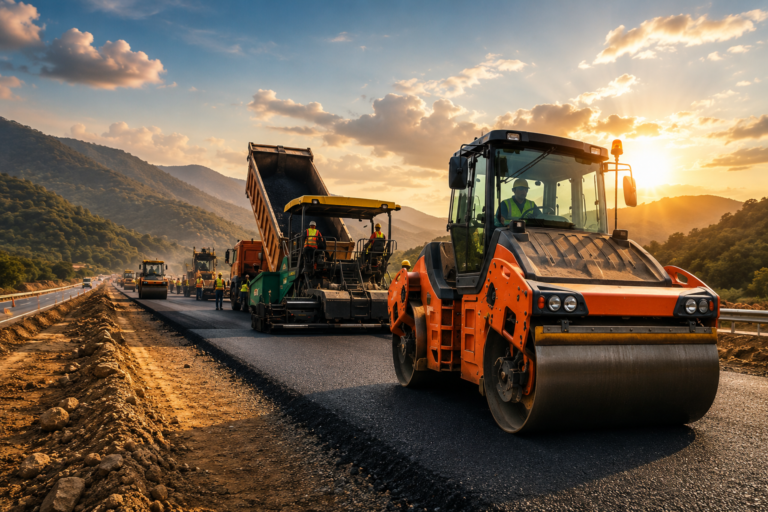
This is one of the show’s traditionally strong categories, and 2026 looks consistent with that pattern. Concrete batching and mixing equipment from Schwing Stetter, Putzmeister, Simem, Sicoma and Apollo’s concrete technology brands sit alongside road construction and maintenance equipment from Wirtgen and Ammann. For contractors working on India’s ongoing highway and expressway build-out, this is arguably the most directly relevant equipment category on the floor — worth prioritising over general earthmoving stands if road and paving work is your core business.
A few practical filters worth applying as you walk the show:
Equipment Brief is tracking BAUMA CONEXPO INDIA 2026 across the show — from pre-show exhibitor and hall breakdowns to on-the-ground coverage of major announcements as they happen. If you’re planning your visit, our exhibitor guide breaks down which halls carry which equipment categories so you can plan a route before you arrive rather than working it out on the floor. If you can’t attend in person, our post-show coverage will summarise the machine launches, technology announcements and market signals that actually matter, without the marketing framing.