KEC International’s Q2 FY27 net profit fell 81.5% to ₹29.74 crore, even as its order book reached a record ₹39,946 crore and FY27 order intake exceeded ₹13,500 crore.

KEC International’s Q2 FY27 net profit fell 81.5% to ₹29.74 crore, even as its order book reached a record ₹39,946 crore and FY27 order intake exceeded ₹13,500 crore.

KEC International’s consolidated order book reached a record ₹39,946 crore in Q2 FY27, but the infrastructure EPC company reported a sharp year-on-year decline in profitability. Net profit for the quarter ended 30 September 2026 fell 81.5% to ₹29.74 crore from ₹160.75 crore a year earlier, while revenue from operations declined 10.2% to ₹5,467.71 crore.
The results, approved by the company’s board on 2 November 2026, show a contrast between a strong order pipeline and pressure on execution, margins and working capital. KEC also reported FY27 year-to-date order intake of more than ₹13,500 crore, including approximately ₹9,500 crore from its transmission and distribution (T&D) business.
The company’s consolidated unaudited results show lower revenue and profitability compared with the corresponding quarter of FY26. EBITDA margin narrowed to 5.0% from 7.1%.
| Metric | Q2 FY27 | Q2 FY26 | Year-on-year change |
|---|---|---|---|
| Revenue from operations | ₹5,467.71 crore | ₹6,091.56 crore | -10.2% |
| EBITDA | ₹271 crore | ₹430 crore | About -37% |
| EBITDA margin | 5.0% | 7.1% | -2.1 percentage points |
| Profit before tax | ₹40.88 crore | ₹212.98 crore | -80.8% |
| Profit after tax | ₹29.74 crore | ₹160.75 crore | -81.5% |
Consolidated figures. EBITDA is rounded as presented in the company’s results release; other financial figures are from the unaudited results. Percentage changes are calculated from the reported figures.
Revenue improved 8.8% sequentially from ₹5,023.54 crore in Q1 FY27, but the year-on-year comparison remained negative. For the first half of FY27, consolidated revenue was ₹10,491.25 crore against ₹11,114.44 crore a year earlier, while profit after tax declined to ₹102.37 crore from ₹285.34 crore.
KEC reported its highest-ever consolidated order book at ₹39,946 crore. The company said the combined order book and L1 position stood at approximately ₹43,500 crore, while its tender pipeline exceeded ₹2 lakh crore.
FY27 year-to-date order intake was more than ₹13,500 crore, of which around ₹9,500 crore came from T&D. The figures underline the importance of power transmission and distribution in KEC’s current order mix. However, the combined order book and L1 figure includes positions where the company is the lowest bidder; it should not be treated entirely as secured contract value.
Equipment Brief has separately covered KEC’s ₹2,872-crore POWERGRID order announcement for 765 kV transmission lines and its ₹2,044-crore October order wins across transmission and wind EPC. Those announcements provide project-level context, while the latest results show the wider order position and financial performance.
KEC managing director and chief executive Vimal Kejriwal attributed the quarter’s operating environment to continued geopolitical and supply-chain disruptions in the Middle East, right-of-way and land-acquisition challenges in India’s T&D business, and calibrated supplies on select projects amid elevated global costs.
The company said it recorded sequential revenue growth, led by T&D. Its explanation points to execution constraints rather than a lack of order opportunities, although the results also show that the larger order pipeline has not yet translated into stronger year-on-year profitability.
Net debt, including acceptances, stood at approximately ₹7,793 crore as at 30 September 2026. Net working capital was 155 days. These figures matter because EPC contractors must fund materials, subcontractors, project mobilisation and work in progress before all project milestones are converted into cash collections.
For suppliers and equipment contractors, a large order book is an indicator of potential future activity, not a confirmed mobilisation schedule. Package-level work fronts, right-of-way availability, site handover, subcontracting decisions and payment terms will determine when specific demand reaches the supply chain.
The consolidated financial results include a note on an investigation by a government agency in connection with a transmission project involving one public-sector undertaking (PSU) official and an employee of KEC. The company disclosed that a chargesheet had been filed and the court had taken cognizance of the matter. It described the proceedings as sub judice and stated that, in its view, the case would not have a material impact on its operations or financial results.
KEC’s statutory auditor, Price Waterhouse Chartered Accountants LLP, separately drew attention to this disclosure in its limited review report. The auditor stated that the possible impact, if any, on the consolidated financial results could not be determined pending completion of the proceedings. The auditor’s review conclusion was not modified in respect of the matter. The disclosure records ongoing proceedings; it is not a finding of guilt.
Equipment Brief analysis: KEC’s Q2 results show why order-book growth and operating performance need to be read together. A record order book and a large L1 pipeline provide visibility of potential work, but execution delays, access constraints, supply-chain costs, debt and working-capital requirements affect how quickly that pipeline converts into revenue and cash.
For equipment owners, manufacturers and specialist subcontractors, the next useful signals will be project-specific mobilisation, procurement packages and site schedules. The headline order book alone is not sufficient to estimate machine requirements or deployment dates.
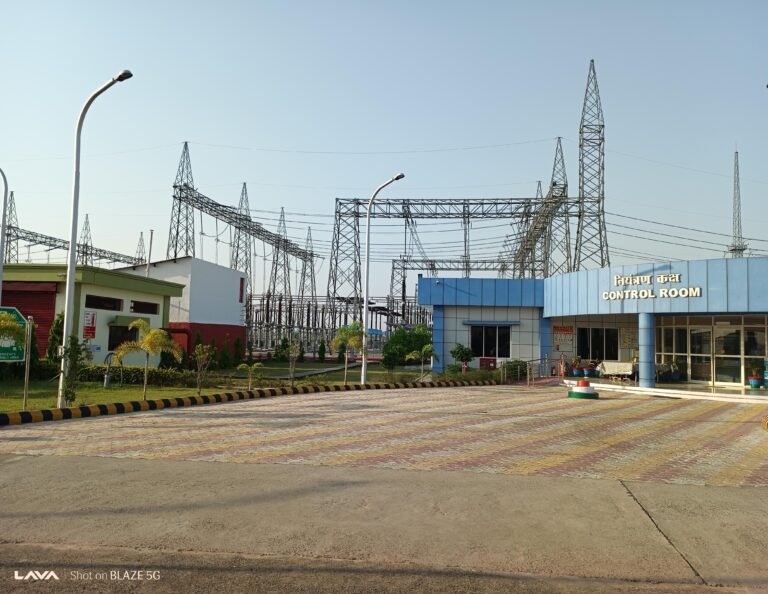
Featured image: PowerGrid substation at Daltonganj, Palamau, Jharkhand. Contextual photograph; it does not depict a KEC project. Photo: Shubham Kr Soni, via Wikimedia Commons; CC0 1.0.