India’s construction equipment market enters FY2026-27 with a large infrastructure pipeline, substantial domestic manufacturing capacity and growing use of digital systems on machines.

India’s construction equipment market enters FY2026-27 with a large infrastructure pipeline, substantial domestic manufacturing capacity and growing use of digital systems on machines.
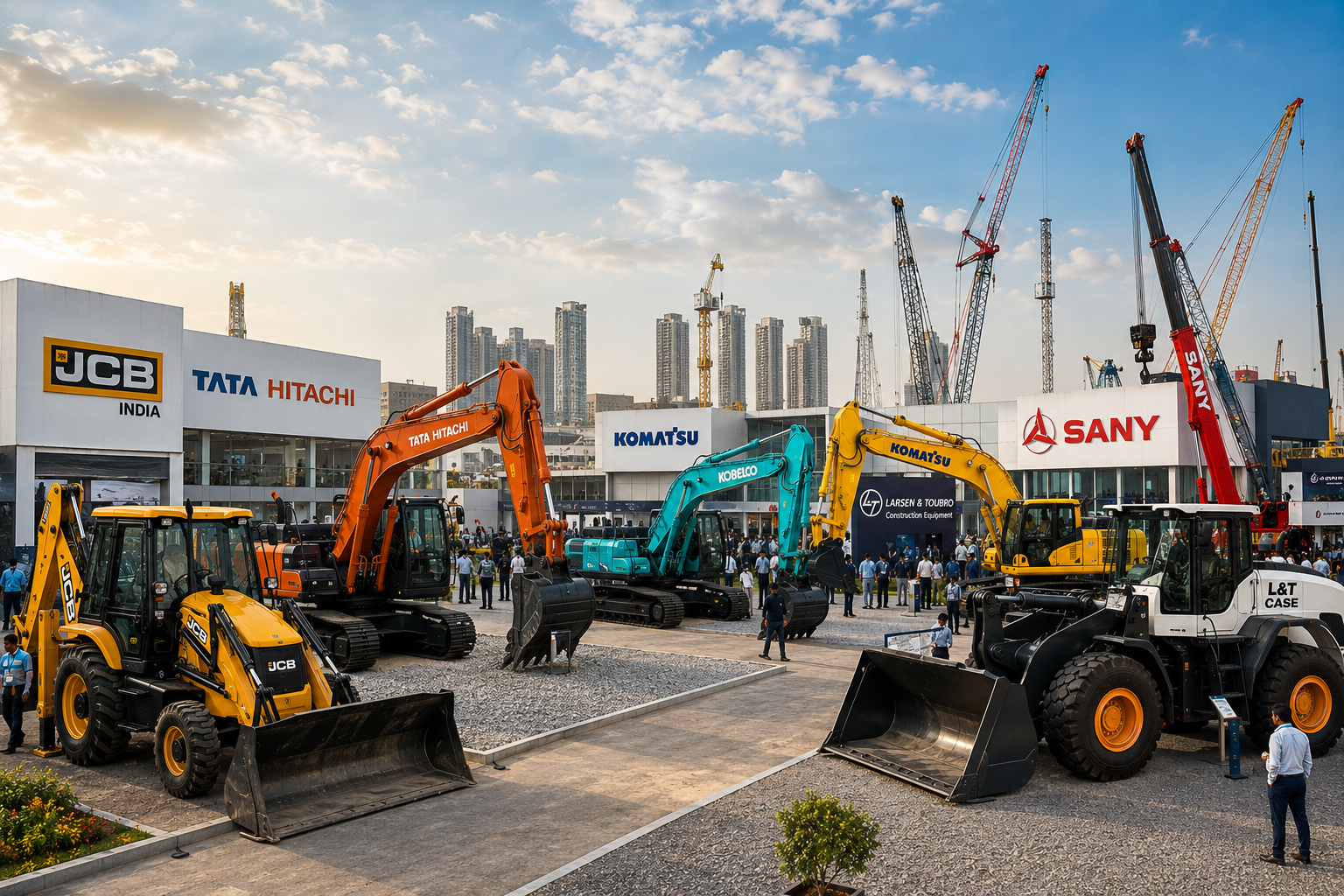
The latest industry numbers, however, show a mixed market. Construction-equipment sales fell about 2% in FY2025-26 to 136,995 units from 140,191 units in FY2024-25. Domestic sales declined 6.7% to 113,229 units, while exports increased 31.5% to 17,394 units. Earthmoving remained the largest segment, with 97,236 units sold, or about 71% of total industry sales. Road-construction equipment increased 6.3% to 7,445 units. (moneycontrol.com)
The infrastructure pipeline remains large. The Union Budget for FY2026-27 provides ₹12.22 lakh crore for capital expenditure, while effective capital expenditure is estimated at ₹17.15 lakh crore. (pib.gov.in)
For the equipment industry, the next phase will be shaped by three factors: how quickly projects move into execution, how much equipment is manufactured and supported locally, and how digital technology is incorporated into machines and fleets.
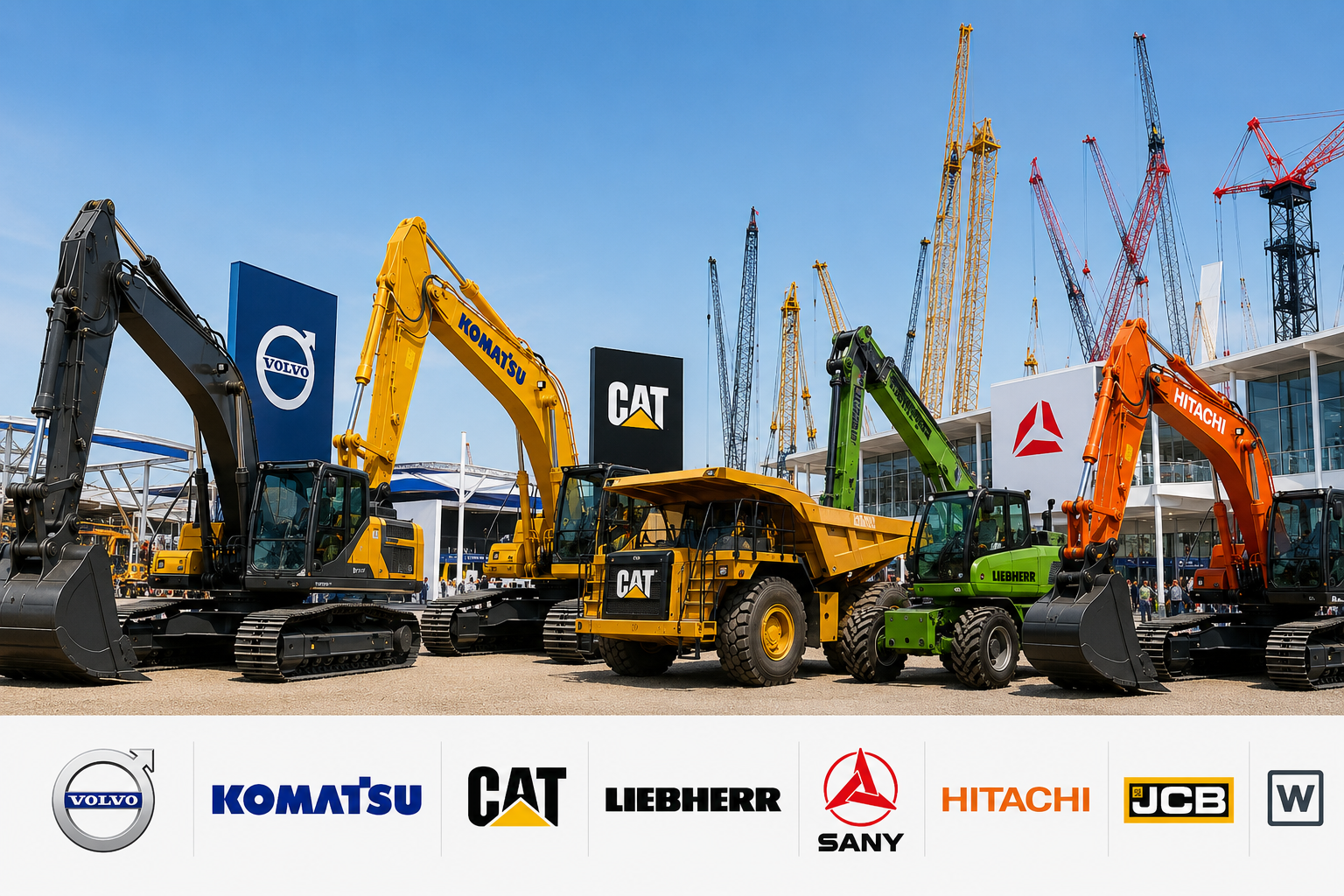
Earthmoving equipment continues to dominate India’s construction-equipment industry.
ICEMA data for FY2025-26 recorded 97,236 earthmoving machines, around 71% of total construction-equipment sales. Material-handling equipment accounted for 15,290 units, concrete equipment for 14,486 units, road-construction equipment for 7,445 units and material-processing equipment for 2,538 units. (equipmentindia.com)
The categories did not move together. Earthmoving sales declined about 2%, material handling fell 10%, road construction grew 6.3% and material processing increased 1.2%. Concrete equipment was broadly unchanged. (equipmentindia.com)
The data points to a market where excavators, backhoe loaders, loaders and other earthmoving machines remain the volume base, while individual infrastructure segments influence demand for specialised equipment differently.
JCB India manufactures a broad range of construction equipment in the country. Its current India operations include manufacturing facilities at Ballabgarh, Pune and Jaipur, covering products such as backhoe loaders, skid steer loaders, telehandlers, tracked excavators, wheel loaders, compact equipment and compaction machinery. (jcb.com)
JCB’s current India excavator range includes the NXT 140 and other models developed for construction and infrastructure applications. The NXT 140 incorporates IntelliControl for machine operating information and LiveLink for machine monitoring, utilisation, health alerts and maintenance information. (jcb.com)
JCB’s corporate information also states that a sixth factory in Vadodara was inaugurated in April 2022. The company’s current website, however, still uses a five-factory description elsewhere on the same page. That factory-count discrepancy should not be presented as a definitive current total without direct clarification from JCB. (jcb.com)
Tata Hitachi operates manufacturing facilities at Jamshedpur, Dharwad and Kharagpur. Its current portfolio includes mini excavators, construction excavators, mining excavators, backhoe loaders, wheel loaders and other equipment. (tatahitachi.co.in)
Models in its current excavator portfolio include the EX 130 Prime, ZAXIS 140H Ultra, EX 200 INFRA Super+, EX 200LC Prime, ZAXIS 370LCH Ultra and ZAXIS 490H Ultra. (tatahitachi.co.in)
Tata Hitachi also has two established digital systems. InSite provides machine information such as location, fuel level, utilisation and operating data on supported equipment. ConSite provides monthly operating reports, caution alarms, performance analysis and emergency notifications. (tatahitachi.co.in)
The combination of local manufacturing and application-specific equipment is important in a market where machines are used across roadwork, general construction, mining and other infrastructure applications.
SANY India manufactures and supports equipment from its Chakan, Pune operation. Its India portfolio spans excavators, cranes, piling rigs, concrete equipment, road machinery and mining equipment. (sany.in)
In January 2025, SANY India announced an expansion of its manufacturing facility. The company said the expanded operation had annual production capacity of more than 14,000 units and fabrication capacity above 100,000 tonnes per year. (sany.in)
The wider product portfolio means SANY is present across several equipment segments that are used in infrastructure and industrial construction. The relevant demand varies by project type rather than moving uniformly across all categories.
Komatsu India operates a manufacturing facility in Chennai and supplies construction and mining equipment through its Indian business and authorised distribution network. Its current product portfolio includes excavators, bulldozers, motor graders, wheel loaders and mining equipment. (komatsuindia.in)
Komatsu has also built a substantial digital layer around its equipment. Smart Construction connects machine information with design and project data. Smart Construction Dashboard can combine 3D design information, aerial mapping and machine-generated as-built data to support monitoring and comparison of planned and completed work. (komatsu.com)
Machine control is another area of development. Komatsu’s Intelligent Machine Control 3.0 provides functions including Auto Swing, Swing-to-Line, Travel-along-Line, 3D Boundary Control and Auto Stop on compatible excavators. The system is designed to help operators work to digital plans and capture as-built information. (komatsu.com)
Automation is developing at a different pace from telematics and machine control.
Komatsu and EARTHBRAIN entered a strategic partnership with AIM Intelligent Machines on July 31, 2026, covering autonomous operation of bulldozers and hydraulic excavators. Komatsu said the collaboration had entered the commercial deployment phase in the United States, where autonomous machines are operating at customer jobsites. The companies plan to begin introducing the technology in Japan from 2027. The system can also be retrofitted to existing bulldozers and hydraulic excavators. (komatsu.com)
This is different from the semi-automatic functions offered by current machine-control systems. Telematics and machine monitoring are already commercial fleet-management tools, while autonomous operation remains at an earlier stage of market deployment.
Volvo Construction Equipment India offers excavators, wheel loaders, articulated haulers, rigid haulers, compactors and electric machines, along with CareTrack telematics. (volvoce.com)
At EXCON 2025, Volvo CE India introduced the EC215 as a Made-in-Bharat excavator for the 20–22 tonne class. The company also displayed the SD110 compactor and L120 Electric Wheel Loader, while presenting the EC650 as a pre-launch machine. The company said the EC215 was developed around Indian customer requirements for construction and mining applications. (volvoce.com)
Volvo CE is also developing a technology centre in Bengaluru focused on research and development, localisation and product development for India and global markets. The centre should be described as an announced development rather than an already operational facility unless newer company information confirms that status. (volvoce.com)
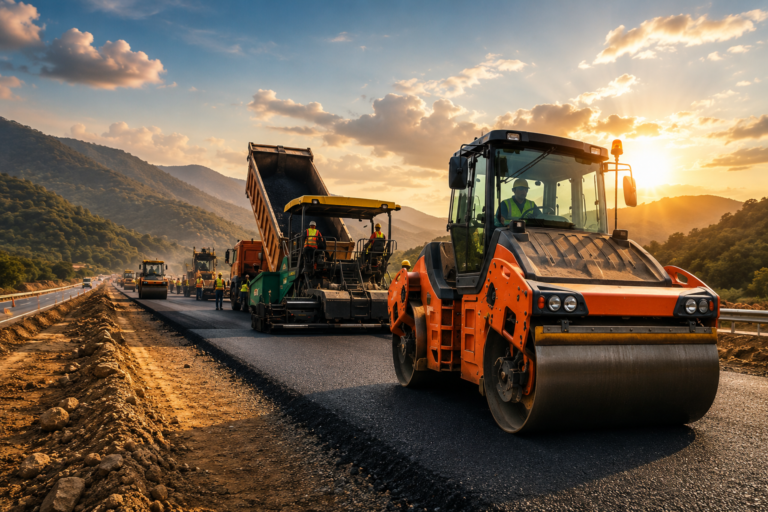
Road construction has been one of the stronger parts of the Indian equipment market.
ICEMA recorded 7,445 road-construction machines sold in FY2025-26, up 6.3% from the previous year. (equipmentindia.com)
The segment includes asphalt pavers and compaction equipment. Ammann’s current India portfolio includes the Apollo AP 550, AP 600 and AP 1000 asphalt pavers. The AP 550 has a maximum paving width of 5.75 metres and output of up to 300 t/h. The AP 600 reaches 7 metres and 500 t/h. The AP 1000 is a 9.5-metre tracked paver with output of up to 700 t/h. (ammann.com)
The category’s growth compared with the wider market shows why equipment demand needs to be assessed segment by segment.
More than 95% of construction equipment sold in India was manufactured domestically in FY2025-26, according to ICEMA-related industry reporting. At the same time, imports increased by about 17%, particularly in earthmoving, material handling and concrete equipment. (equipmentindia.com)
The figures show the scale of India’s domestic production base without implying complete localisation of every component or technology.
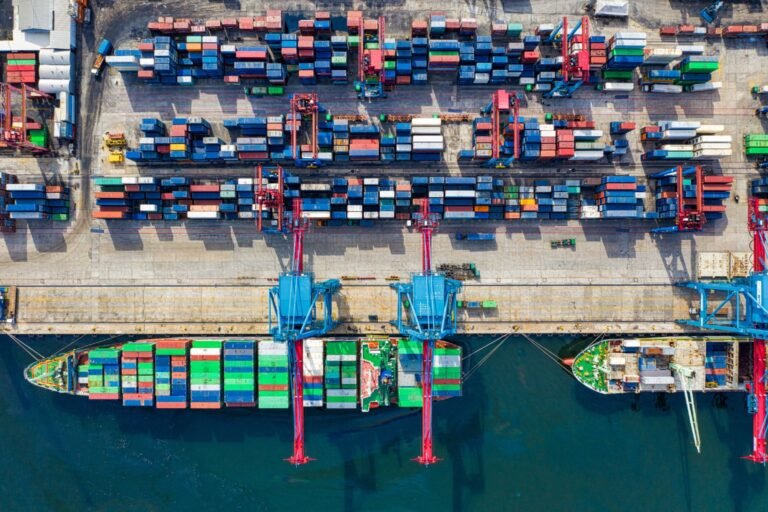
India is also becoming an important export base. Construction-equipment exports reached 17,394 units in FY2025-26, an increase of 31.5% from the previous year. (moneycontrol.com)
The long-term infrastructure opportunity is being matched by near-term market constraints.
ICEMA attributed the FY2025-26 domestic slowdown to slower infrastructure execution, project delays, land-acquisition issues, contractor payment delays, higher equipment costs following the transition to CEV Stage V emission standards and higher input costs. (moneycontrol.com)
That helps explain the gap between infrastructure spending and equipment sales. A large project pipeline does not generate its full equipment requirement immediately. Demand changes as projects move from approval and award into mobilisation and then into different construction stages.
For equipment manufacturers, dealers and rental companies, project timing is therefore as important as the overall size of the infrastructure programme.
The Indian construction-equipment industry has a large domestic base, but FY2025-26 showed that growth is not uniform.
Earthmoving remains the industry’s largest segment. Road-construction equipment grew while material handling declined. Domestic sales weakened even as exports increased strongly. At the same time, manufacturers are expanding local production and adding machine connectivity, digital construction tools, machine control and, in selected applications, autonomous operation. (equipmentindia.com)
The outlook will depend on how quickly major infrastructure projects move into execution, how effectively manufacturers support equipment in the field and how widely contractors adopt technologies that provide better information, control and automation.
The result is not a single growth story for the Indian construction-equipment market. It is a market separating into different equipment categories, applications and technology levels, with infrastructure execution determining when that demand reaches the ground.