Caterpillar’s Q3 2026 results show 18% growth in Construction Industries sales, but Asia-Pacific performance was mixed. Here is what the figures mean for equipment buyers.

Caterpillar’s Q3 2026 results show 18% growth in Construction Industries sales, but Asia-Pacific performance was mixed. Here is what the figures mean for equipment buyers.

Caterpillar reported third-quarter 2026 sales and revenues of US$20.682 billion on 29 October, up 17% from a year earlier, with its Construction Industries segment rising 18% to US$7.983 billion. The results show growth across the company’s three main business segments, but regional performance was uneven. In Asia/Pacific, total company sales and revenues declined 2%, while Construction Industries segment sales increased 2% to US$925 million.
The figures come from Caterpillar’s official Q3 2026 results announcement and its 25-page earnings release. They are global company results, not a report of Indian equipment sales.
Caterpillar’s Construction Industries segment recorded sales of US$7.983 billion, compared with US$6.760 billion in Q3 2025. Segment profit increased 33% to US$1.831 billion, and the segment profit margin rose to 22.9% from 20.4% a year earlier.
The company attributed the sales increase mainly to US$874 million in higher sales volume and US$349 million in favourable price realisation. It said higher volume was primarily driven by equipment sales to end users at the consolidated level. Higher freight and other manufacturing costs offset part of the benefit in Construction Industries.
For contractors and fleet owners, the result is a useful indicator of the global environment for Caterpillar’s construction business. It is not, by itself, evidence that every market is growing at the same pace or that machines will be easier to obtain locally.
| Segment | Q3 2026 sales | Year-on-year change | Segment profit |
|---|---|---|---|
| Construction Industries | US$7.983 billion | +18% | US$1.831 billion (+33%) |
| Resource Industries | US$4.615 billion | +15% | US$622 million (+14%) |
| Power & Energy | US$8.784 billion | +18% | US$2.143 billion (+31%) |
These are segment sales figures as presented by Caterpillar, including inter-segment activity where applicable. They should not be read as the company’s external sales alone.
Caterpillar’s regional table shows total Asia/Pacific sales and revenues of US$2.813 billion, down 2% year on year. The segment picture was mixed:
Caterpillar said the Asia/Pacific increase in Construction Industries sales reflected higher sales volume, partly offset by price realisation and currency effects. It also said the volume increase was mainly driven by changes in dealer inventories. That distinction matters: sales through a dealer channel can move as stock levels change, so the regional figure is not a direct measure of end-user demand in each country.
The company does not break out India separately in this results table. The Asia/Pacific figures therefore cannot be used to claim that Indian construction-equipment sales rose or fell by the same percentage.
Resource Industries sales increased 15% to US$4.615 billion. Within the segment, sales for Mining, Heavy Construction and Quarry & Aggregates were US$3.697 billion, up 22% year on year. Caterpillar said the increase in this application group was primarily related to changes in dealer inventories.
Segment profit increased 14% to US$622 million, while the segment margin was 13.5%, compared with 13.6% in Q3 2025. The combination of higher sales and a slightly lower margin is a reminder that volume growth does not automatically translate into stronger profitability at the same rate.
For mining contractors and quarry operators, the results are best used as one global reference point alongside local commodity plans, project schedules, dealer stock and machine utilisation. Equipment Brief has also covered ICRA’s FY27 outlook for India’s construction-equipment market, which provides India-specific context rather than relying on a multinational’s regional reporting.
Caterpillar’s Power & Energy segment recorded sales of US$8.784 billion, up 18%. External sales were US$7.288 billion, also up 18%. Within Power Generation, sales rose 30% to US$3.421 billion.
The company attributed the power-generation increase mainly to turbines and turbine-related services, and large reciprocating engines used primarily in data-centre applications. This is relevant to infrastructure contractors because data-centre development requires coordinated electrical, mechanical, cooling and civil packages. However, Caterpillar’s Power & Energy result should not be treated as a proxy for construction-equipment sales or as confirmation of a particular Indian data-centre project.
Caterpillar’s consolidated operating profit margin increased to 20.4% from 17.3%; the adjusted operating profit margin was 20.6%, compared with 17.5%. Reported profit per share was US$7.13 and adjusted profit per share was US$7.20. The company reported enterprise operating cash flow of US$4.4 billion and enterprise cash of US$7.9 billion at quarter-end.
The release says operating profit included US$128 million in tariff recoveries. Higher sales volume and favourable price realisation helped results, while manufacturing and freight costs remained relevant offsets in some segments. Readers should therefore avoid attributing the entire increase in profit to demand alone.
The Q3 report is useful global context, but Indian buyers should not use it as a substitute for a local quotation or delivery confirmation. A practical check before purchase or rental is:
Use the global results to frame questions, not to forecast Indian availability, local price changes or future demand.
For a wider comparison of equipment-market signals, see Equipment Brief’s analysis of Volvo CE’s Q3 orders and the SDLG comparison. The two reports cover different companies and measures; their figures should not be combined as if they represented the same market or reporting basis.
Caterpillar’s Q3 2026 results confirm strong year-on-year growth in its global Construction Industries, Resource Industries and Power & Energy segments. They also show that Asia/Pacific did not share the same overall growth pattern as the company globally, and that dealer inventory movements affected some regional and application-level comparisons.
The report does not provide an India-only sales figure, announce a change in Indian product availability or establish future local pricing. Contractors, dealers and rental companies should use it as a global market indicator and verify purchasing decisions against local operating conditions.
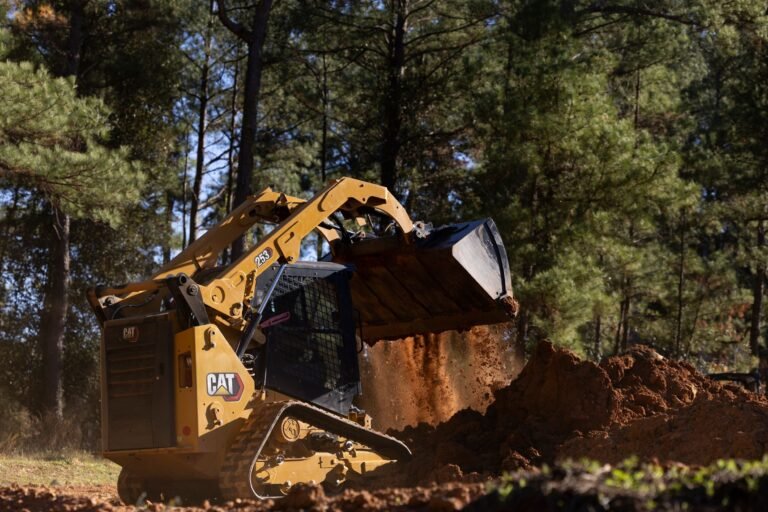
Image credit: Caterpillar press photograph accompanying the company’s October 2026 results announcement. The image shows a dealer and customer at a worksite; it is illustrative and is not an India-specific deployment.