Diesel and electric construction equipment are now available side by side across several machine categories, but they suit different operating conditions.


Diesel and electric construction equipment are now available side by side across several machine categories, but they suit different operating conditions.
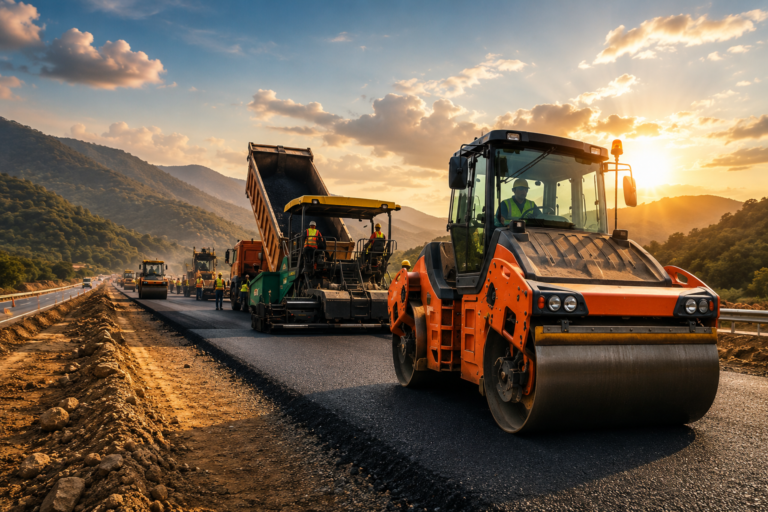
Diesel construction equipment does not depend on electrical charging infrastructure. That remains useful on sites where machines move between work fronts or where grid access is limited.
Volvo CE’s current India range includes the EC210, a crawler excavator with an operating weight of 20,700 kg, gross power of 123 kW and a 1.1 m³ bucket. Volvo positions the machine for general construction and medium- to heavy-duty applications.
For mobile equipment, conventional diesel operation also fits established fuel-supply arrangements. Contractors can refuel machines at the site or through existing fuel logistics without planning a battery-charging cycle.
That makes diesel particularly straightforward for equipment that must move frequently between work areas or projects.
Battery-electric machines change the operating model because energy has to be stored onboard and replenished through charging.
Volvo’s EC230 Electric is currently listed in India with an operating weight of 23,780–24,500 kg and a 422 kWh battery. Volvo gives an indicative runtime of up to eight hours depending on the application and working conditions. The machine supports GBT and CCS2 charging connections.
Volvo’s EC55 Electric has a 5,800 kg operating weight and a 67 kWh battery. Its indicative runtime is four to six hours depending on the application.
Runtime figures should not be treated as fixed shift lengths. Actual energy consumption depends on the work cycle, machine utilisation and site conditions.
Charging also becomes part of fleet planning. Volvo says the EC230 Electric can be charged using DC fast charging, with charging times depending on the charger and connection used.
A grid-connected electric machine represents a different solution from a battery-electric excavator.
Volvo’s EC500 Electric is a 49,006 kg crawler excavator with a 250 kW gross-power rating and a 3.03 m³ bucket. It uses a continuous grid connection rather than an onboard battery as its primary energy source. Volvo positions it for static applications where the excavator does not need to move around the site.
Because the machine remains connected to external power, it does not need the refuelling or battery-charging cycle associated with a conventional diesel or battery-electric excavator. The limitation is mobility: the application has to accommodate the machine’s cable connection.
This configuration is therefore particularly relevant to defined, long-duration operations rather than mobile earthmoving across a large site.
Comparing diesel and electric machines by kW alone can be misleading.
The current Volvo India page lists the EC210 diesel excavator at 123 kW gross power. The EC230 Electric India page currently lists 422 kW gross power, along with a 422 kWh battery. That power figure differs from Volvo’s European EC230 Electric specification, which lists 160 kW gross power and a 264 kWh battery.
Because the regional specifications differ, the India-page EC230 power figure should not be used for a direct diesel-versus-electric performance comparison without reference to the applicable technical specification.
More generally, machine productivity depends on more than power rating. Hydraulic performance, bucket capacity, breakout force, cycle time, machine weight and operator input all affect excavation output.
Volvo says the EC500 Electric can provide more responsive hydraulics and faster cycle times than a diesel alternative. Those are manufacturer-stated claims, not independent productivity benchmarks.
Energy cost is one of the main factors in a diesel-versus-electric comparison.
Electric machines avoid diesel consumption, but the actual cost advantage depends on electricity tariffs, utilisation, charging equipment, grid availability and the machine’s duty cycle.
Volvo states that the EC500 Electric can reduce energy-related costs by up to 50% compared with fuel costs. The company also states that its electric machines require 30% less maintenance. These figures are Volvo’s published claims, not independent fleet-wide benchmarks.
JCB similarly identifies reduced operating costs, servicing and maintenance as benefits of its E-TECH machines.
For contractors, the useful calculation is the total operating cost of the specific machine. Purchase price, energy cost, utilisation, charging infrastructure and maintenance all need to be considered.
Electric machines remove many engine-related service requirements, but they are not maintenance-free.
Volvo says the EC500 Electric uses a maintenance-free electric motor and does not require engine-related consumables such as engine oil, filters and water separators.
JCB says its electric machines have no conventional engines and use maintenance-free batteries with reduced servicing requirements.
Hydraulic systems, undercarriages, tracks, tyres, attachments and other mechanical components still require inspection and maintenance.
The difference is therefore the type and frequency of maintenance required, rather than the elimination of maintenance altogether.
Electric machines have a clear application case where local exhaust emissions and noise are significant considerations.
JCB’s E-TECH range is designed for applications including urban and indoor environments, with zero tailpipe emissions at the point of use and lower noise levels. JCB also identifies applications where air quality is sensitive or where work needs to continue without engine noise.
Volvo positions the EC500 Electric for static applications, including operations where continuous grid power is available. The machine is also promoted for noise-sensitive areas and locations where zero tailpipe emissions are required.
Typical considerations for an electric machine therefore include:
The machine’s application remains the deciding factor.
Diesel remains practical when machines need to operate independently of charging infrastructure and move frequently between work areas.
This is relevant to equipment used across road projects, large earthmoving sites and other applications where operating locations change regularly.
The difference becomes more significant as machine size increases. A compact battery-electric excavator can have a relatively manageable charging requirement, while a larger machine needs much more electrical energy and more detailed site planning.
For that reason, replacing a diesel fleet with electric machines is unlikely to be a simple one-for-one decision. Different equipment may need different power solutions depending on how each machine is used.
The Indian electric-equipment portfolio is becoming broader.
Volvo CE’s current India electric range includes the EC500 Electric, EC230 Electric, PT220 Electric, DD40 Electric, L120 Electric and EC55 Electric. The range extends from the 5,800 kg EC55 Electric to the 49,006 kg EC500 Electric.
Tata Hitachi also showcased the EX210LC Electric and 33e Electric at EXCON 2025. The company launched the EX210LC Electric at the event; the 33e Electric was part of the display. This distinction is important when describing the status of the two machines.
JCB continues to develop its E-TECH range, with electric machines aimed particularly at compact and urban applications. JCB says its electric range includes charging options for different applications, including single-phase, three-phase and fast charging.
The three power configurations can be viewed differently.
Diesel equipment offers established refuelling and unrestricted machine mobility within normal operating conditions.
Battery-electric equipment removes tailpipe emissions during operation and can reduce noise, but requires charging infrastructure and planning around battery capacity and duty cycle.
Grid-connected electric equipment can operate continuously where a suitable electrical connection is available, but is designed around a more static operating pattern.
The choice should therefore be made machine by machine.
For mobile earthmoving across changing work fronts, diesel may remain the simpler solution. For urban or indoor applications, battery-electric equipment can provide operating advantages. For fixed, high-utilisation applications with suitable grid infrastructure, a grid-connected machine such as the Volvo EC500 Electric represents a different operating model.
The practical comparison comes down to duty cycle, utilisation, mobility, energy availability, site conditions, maintenance and total operating cost rather than powertrain preference alone.