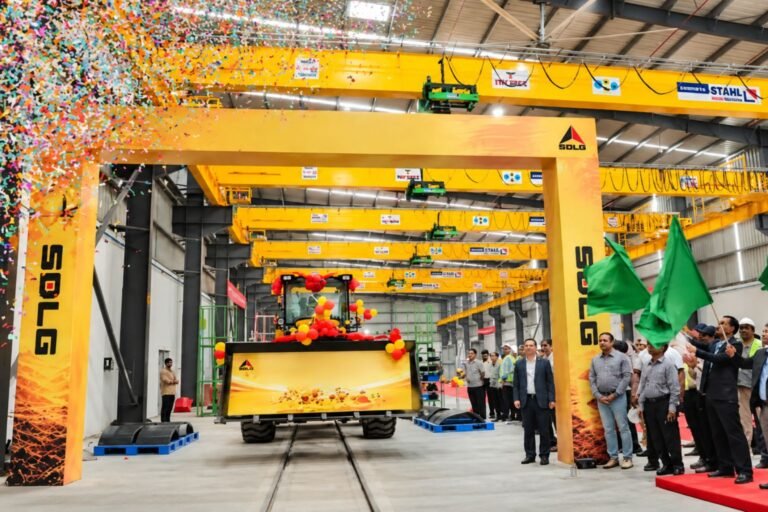
The construction-equipment industry is changing in two clear directions: machines are becoming more connected, and electric equipment is moving into larger applications.

The construction-equipment industry is changing in two clear directions: machines are becoming more connected, and electric equipment is moving into larger applications.
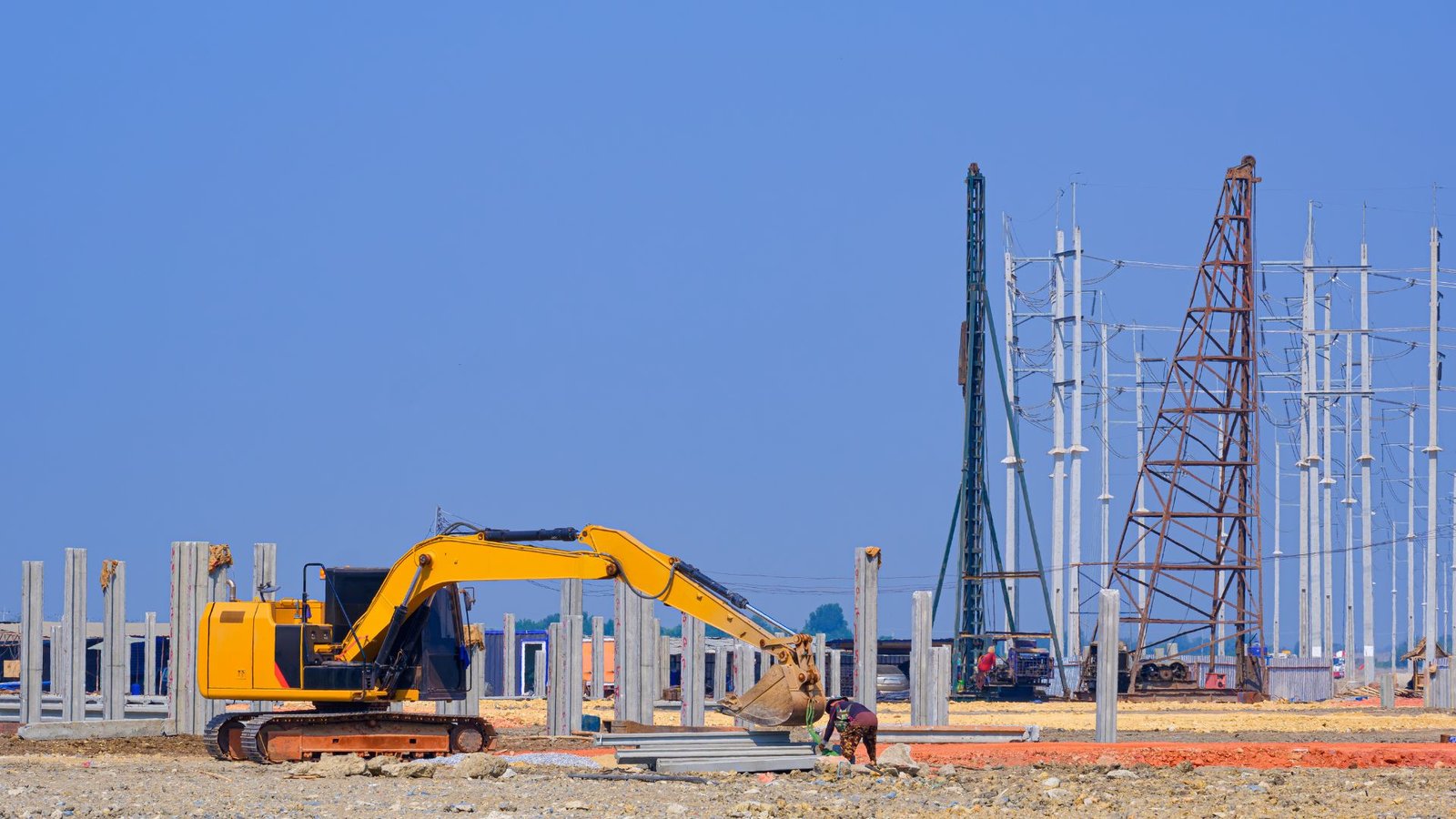
The two developments are at different stages. Telematics is already an established part of fleet management. Electric equipment is commercially available, but its suitability still depends heavily on machine type, duty cycle and site infrastructure.
For contractors and equipment owners, the practical change is that machine selection increasingly involves more than horsepower, operating weight and capacity. Connectivity, maintenance data, energy supply and digital site systems are becoming part of the equipment decision.
Electric construction equipment has moved beyond compact machines.
Volvo Construction Equipment’s EC500 Electric is a 50-tonne-class crawler excavator with a 49,006 kg operating weight, 3.03 m³ bucket capacity and 250 kW gross power. The India specification lists a grid connection rather than a conventional battery-charging arrangement. Volvo describes the machine for static applications where continuous cable connection is practical.
Volvo is also testing a pre-build EC500 Electric with customers. The machine combines battery power with grid-connected operation and has a 35 m cable reel. Customer testing is being used to support further product development.
The move is also visible in articulated haulers. Volvo began serial production of the A30 Electric and A40 Electric in 2026. The company says they are the first electric articulated haulers of this size to enter serial production.
The A30 Electric has a 29-tonne payload, a 450 kWh battery and a 17.8 m³ body volume. Volvo identifies quarrying and mining among the intended applications.
These machines show that electrification is moving into equipment with substantially higher energy requirements. That also makes site power a more important part of machine planning.
An electric machine cannot be evaluated independently of how it will be powered.
In May 2026, Volvo CE and Hitachi Energy signed a memorandum of understanding covering power supply, charging solutions, energy management and operational integration for zero-emission construction sites. The collaboration is focused on the system requirements needed to operate electric construction equipment on site.
For contractors, the relevant questions therefore include electrical capacity, charging arrangements, operating hours and duty cycle.
A compact electric excavator on an urban project has different requirements from a large excavator working continuously at a fixed location. The technology may be the same in principle, but the site requirements are not.
Connectivity is further along than large-scale electrification.
JCB’s LiveLink platform provides information on machine location, utilisation, fuel consumption, maintenance requirements and security. JCB says more than 580,000 machines worldwide are connected to the platform and that it supports more than 40,000 customers.
The platform can also provide working-time, idle-time and fuel-use information, together with functions such as geofencing and maintenance alerts.
In August 2026, JCB announced that LiveLink would become standard on its mini excavators and site dumpers, with a five-year subscription included.
That move is significant from a technology-maturity perspective. Connectivity is no longer restricted to premium or specialist equipment. Manufacturers are increasingly building it into standard machine packages.
Tata Hitachi’s ConSite provides machine-operating information through monthly reports and alarm notifications. The company says the system provides machine-health information, performance analysis and emergency alerts.
Tata Hitachi also describes ConSite and InSite as systems that allow customers to remotely monitor machine health, maintenance and location using operational data.
For fleet owners, the practical application is straightforward: equipment can be monitored without relying entirely on physical inspections or operator reports.
That can support maintenance planning and provide a clearer view of which machines are being used and where.
Connected machines are one step in digital construction. Machine control adds another.
Komatsu’s Intelligent Machine Control 3.0 uses sensors, GPS, smart hydraulics and software to guide excavator operation against a digital plan. The system includes Auto Swing, Swing-to-Line, Travel-along-Line, 3D Boundary Control and Auto Stop.
Komatsu describes IMC 3.0 as semi-automatic operation. The operator remains responsible for the machine, while the system assists with positioning and defined operating functions.
This is an important distinction from autonomy. Machine control improves the operator’s ability to follow a digital work plan; it does not mean the machine is independently carrying out the entire task.
The Ministry of Road Transport and Highways has developed an Automated & Intelligent Machine-aided Construction (AIMC) framework for highway projects.
The framework covers GPS-aided motor graders, intelligent compaction rollers and stringless pavers. Its technical specification calls for an RTK base station to provide real-time corrections to the grader’s positioning system.
MoRTH specifies a minimum 20 Hz position-update rate and says RTK can improve positioning accuracy from metres to centimetres.
This is a practical form of construction automation. The operator remains part of the process, but the machine receives precise digital information about where and how the work should be carried out.
Artificial intelligence is developing alongside connectivity, but current applications are generally focused on defined tasks.
JCB’s IntelliSense is one example. JCB says the system uses AI to detect pedestrians in defined risk areas and alert the operator. It is integrated with LiveLink, allowing safety-related information to be recorded and reviewed.
This should not be described as autonomous operation.
The AI is performing a specific detection function while the operator remains responsible for controlling the machine. That places AI-assisted safety systems below full machine autonomy in terms of technology maturity.
Autonomous construction equipment is more advanced than a concept in some applications, but it is not yet a mainstream fleet technology.
In July 2026, Komatsu, EARTHBRAIN and AIM Intelligent Machines entered a strategic partnership for autonomous operation of bulldozers and hydraulic excavators. Their system combines Smart Construction-generated work plans and target-terrain data with AIM’s physical-AI platform.
Komatsu says the system is designed to allow machines to understand project objectives, determine construction methods and travel routes, and execute construction tasks autonomously.
The companies say the technology has entered the commercial deployment phase in the United States, where autonomous Komatsu machines are operating at customer jobsites. They also plan to introduce the solution in Japan from 2027.
AIM’s technology can also be retrofitted to existing bulldozers and hydraulic excavators, according to Komatsu.
That puts autonomous operation ahead of the prototype stage, but still well short of widespread deployment across ordinary construction fleets.
Smart construction depends on more than the machine itself.
Komatsu’s Smart Construction platform includes 3D Machine Guidance, Intelligent Machine Control, Fleet and Remote solutions. The company positions the platform as a way to connect construction planning, equipment and jobsite management.
This connection becomes increasingly important as machines move from receiving simple operator inputs to working from digital site information.
For example, a machine-control system can use a digital design to guide excavation, while fleet systems can track machine utilisation and operating data. Autonomous systems take this one step further by using digital work plans as inputs to machine decision-making.
The market is not moving from conventional equipment directly to autonomous machines. It is developing in stages.
Connected machines are established. Telematics systems are already widely deployed and are becoming standard on more equipment.
Machine control is established and expanding. Commercial systems such as Komatsu IMC 3.0 and India’s AIMC framework demonstrate that digital guidance is already being used in real construction applications.
AI is commercially deployed for specific functions. JCB’s IntelliSense is an example of AI supporting operator awareness rather than controlling the machine.
Electrification is commercially available but application-dependent. Volvo has electric haulers in serial production and is testing a larger electric excavator, while site-power requirements remain a central consideration.
Autonomy is at an earlier stage. Komatsu and AIM have reported commercial deployment in the United States, but autonomous operation remains limited to specific applications and markets.
For equipment buyers, the useful measure is not how much technology a machine contains. It is what that technology changes in the operation.
Connectivity can improve fleet visibility. Machine control can improve precision. AI can support safety functions. Electrification can change energy and maintenance requirements. Autonomous systems can reduce direct operator involvement where the application is suitable.
The construction machine is becoming part of a larger system involving power infrastructure, sensors, software, digital project data and fleet management. The pace of that change will vary by equipment category, but the direction is already visible in commercial machines and active infrastructure projects.