Tata Hitachi Construction Machinery has expanded its compact excavator portfolio with the launch of the NX30 neo and ZAXIS 40U at bauma CONEXPO INDIA 2026 in Greater Noida.

Tata Hitachi Construction Machinery has expanded its compact excavator portfolio with the launch of the NX30 neo and ZAXIS 40U at bauma CONEXPO INDIA 2026 in Greater Noida.
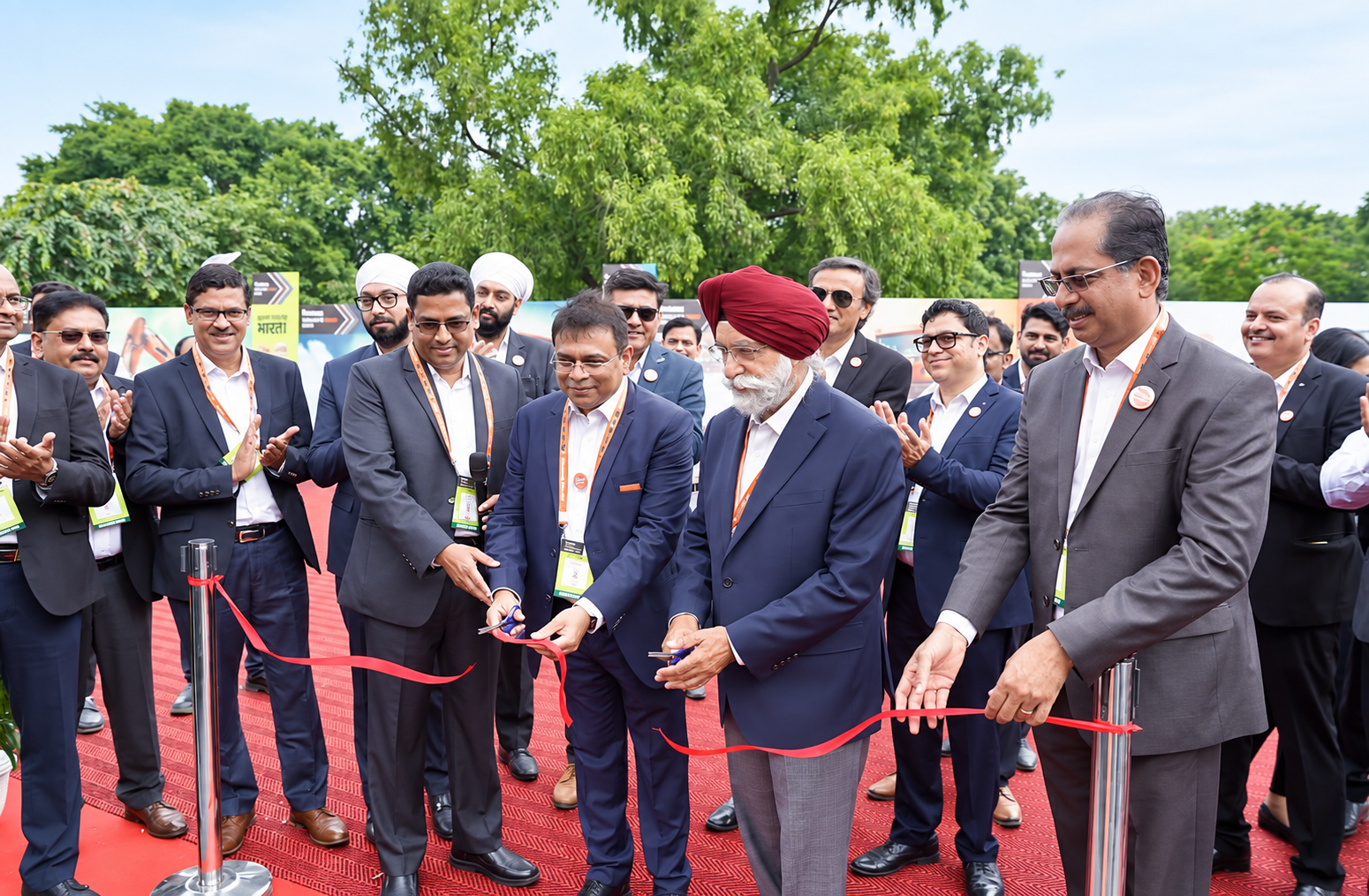
The two mini excavators are aimed at applications where compact dimensions, manoeuvrability, transportability and attachment flexibility are important.
The launches come as Tata Hitachi showcases 13 machines at the exhibition, alongside attachments and digital fleet-management solutions. The broader display ranges from mini excavators and electric equipment to 35-tonne-class construction excavators, backhoe loaders and wheel loaders.
The NX30 neo is a 2.9-tonne-class mini excavator powered by a 27.4 HP Yanmar engine. Tata Hitachi lists an operating weight of 2,900 kg and a bucket capacity of 0.04–0.07 m³.
A key element of the NX30 neo is Tata Hitachi’s Quadra Flow Hydraulic System, a four-pump hydraulic arrangement designed to vary displacement according to application load and speed requirements.
According to Tata Hitachi, the system provides:
The machine is also designed around maintainability and durability, with a heavy-duty track frame, track chain and rollers. Tata Hitachi says the NX30 neo can be configured for different applications through multiple bucket options and attachments, including a factory-fitted rock-breaker piping kit.
The significance of the NX30 neo is not simply its size. For contractors working on urban projects, utility installation, landscaping, drainage, small excavation jobs and other confined worksites, the ability to bring an excavator into restricted areas can be as important as outright digging capacity.
Its relatively low operating weight also makes transport between sites easier, potentially allowing contractors to move the machine more frequently between smaller projects rather than keeping it dedicated to one large site.
The second launch, the ZAXIS 40U, moves Tata Hitachi slightly higher within the compact excavator segment.
The machine develops 22.0 kW (29.9 PS) at 2,400 rpm, with an operating weight of 3,620–3,900 kg and an ISO heaped bucket capacity of 0.04–0.12 m³.
One of its defining characteristics is its zero-tail-swing design, combined with boom-swing functionality and a compact footprint. These characteristics are particularly relevant where the excavator has to work close to buildings, roads, walls or other obstacles.
The ZAXIS 40U is also being offered with an air-conditioned cabin, according to reporting from Autocar Professional and other industry coverage of the bauma launch.
Tata Hitachi’s published specifications highlight several other features, including:
The two launches are significant because they expand Tata Hitachi’s offering at the smaller end of the excavator market rather than simply adding another machine to its conventional construction equipment range.
The company’s existing compact portfolio includes the NX50 and NX80, while the wider mini-excavator range includes models such as the ZAXIS 33U. The NX30 neo and ZAXIS 40U therefore give customers additional choices between machine size, operating weight, capacity and application requirements.
For contractors, compact excavators can serve a different role from larger crawler excavators. A 20- or 30-tonne machine may provide substantially higher productivity on a major excavation project, but it can become inefficient when working in narrow urban locations or on smaller jobs.
That creates a different equipment equation: machine utilisation, ease of transport and access to confined worksites can become as important as maximum digging capacity.
This is where Tata Hitachi’s two new machines are positioned.
Tata Hitachi is also using bauma to demonstrate a wider attachment ecosystem.
The company’s display includes:
The strategy is important because the value of a compact excavator increasingly depends on what it can do beyond conventional digging.
A machine equipped for excavation can be configured for breaking, crushing, screening, trenching or other specialised work depending on the attachment. For smaller contractors, this can potentially increase the number of applications a single machine can undertake.
Tata Hitachi’s NX30 neo, for example, has been designed with attachment compatibility and a factory-fitted rock-breaker piping option.
Another notable aspect of Tata Hitachi’s bauma showcase is that the company is presenting machines, attachments and digital services together.
Its ConSite and InSite platforms provide fleet-monitoring capabilities, including information related to machine health, fuel consumption and operating parameters.
For equipment owners, this shifts the conversation from simply buying a machine to managing the machine throughout its operating life.
Data from connected equipment can help fleet managers monitor utilisation and maintenance requirements, while service teams can use machine information to support diagnostics and maintenance planning.
For contractors operating several machines across multiple projects, these capabilities can become particularly relevant because equipment downtime has a direct effect on project utilisation.
The two compact excavators are only one part of Tata Hitachi’s bauma CONEXPO INDIA 2026 presentation.
The company’s 13-machine display includes the e-33U electric excavator, NX50, NX80, SHINRAI Prime, SHINRAI Pro, ZAXIS 140H, EX 210LC Value+, EX 215LC Prime, ZAXIS 220LC Ultra, EX 350LC Prime and TL 340H Prime, in addition to the two new launches.
The inclusion of the e-33U electric excavator alongside conventional diesel equipment also shows that Tata Hitachi is addressing multiple technology directions at the same exhibition — from compact machines and attachments to electrification and connected fleet management.
The NX30 neo and ZAXIS 40U highlight an important change in how compact construction equipment is being positioned in India.
The requirement is not always for the largest or most powerful machine. On many urban and specialised projects, the challenge is getting equipment into the work area, completing the job efficiently and moving it to the next site without excessive logistical complexity.
That makes compact dimensions, zero-tail-swing operation, transportability, attachment compatibility, operator comfort and machine monitoring increasingly relevant purchase considerations.
Tata Hitachi’s latest launches address different parts of that equation. The NX30 neo emphasises a compact footprint and hydraulic flexibility, while the ZAXIS 40U adds greater operating weight and capacity with zero-tail-swing capability and an air-conditioned cabin.