NHIDCL’s Corrigendum-III adds bid-security formats and revised declarations for the ₹11,982.36-crore Brahmaputra tunnel tender. Bids are due 2 November 2026.

NHIDCL’s Corrigendum-III adds bid-security formats and revised declarations for the ₹11,982.36-crore Brahmaputra tunnel tender. Bids are due 2 November 2026.
New Delhi, October 14, 2026: National Highways & Infrastructure Development Corporation Ltd (NHIDCL) has extended the bid deadline for its ₹11,982.36-crore Brahmaputra road-cum-rail underwater tunnel tender in Assam to 2 November 2026 at 6:00 PM.
Update — 27 October 2026: NHIDCL’s Corrigendum-III dated 16 October 2026 has now been retrieved. It adds prescribed formats for a ₹6-crore surety bond and an e-bank guarantee for bid security under Clause 1.2.4; replaces Appendix-IX with a revised catastrophic-failure undertaking; changes the cross-reference for the insolvency non-applicability affidavit from Clause 2.2.1(g) to Clause 2.2.1(f); and revises wording on catastrophic failures during the two years before the Application Due Date and self-certification of existing commitments by an authorised signatory. NHIDCL’s current tender page lists bid due on 2 November 2026 and technical bid opening on 3 November 2026; the Central Public Procurement Portal/eProcure record specifies 6:00 PM for both. Bidders should review the complete corrigendum and revised annexures before submission.
| Item | Verified tender detail |
|---|---|
| Authority | NHIDCL |
| Tender ID | 2026_ |
| Procurement stage | Open tender; no L1 bidder or award announced |
| Tender value | ₹11,982.36 crore |
| Revised submission deadline | 2 November 2026, 6:00 PM |
| Revised bid opening | 3 November 2026, 6:00 PM |
| Work period | 1,826 days |
| Bid validity | 120 days |
NHIDCL’s official work description calls for the construction of a four-lane twin-tube road-cum-rail underwater tunnel under the Brahmaputra, including four-lane approaches and provision of railway infrastructure in one of the tubes.
The work is described as being in Assam and on EPC mode. The procurement record lists the package as civil works with a 1,826-day work period. It also lists a ₹6-crore earnest-money deposit and a ₹5-lakh tender-document fee.
One portal field labels the form of contract as “EOI” while the official work description states EPC mode. Contractors and suppliers should therefore read the complete notice, RFQ, schedules, drawings and corrigenda rather than using a single summary field to determine contractual obligations.
As of 27 October 2026, NHIDCL’s current tender page still lists this package as an open tender. No L1 bidder, Letter of Acceptance, contract award, work order or mobilisation notice was found in the official procurement sources reviewed for this update.
The ₹11,982.36-crore figure is the tender value shown on the procurement portal. It is not an accepted contract price, contractor order intake or confirmed equipment order.
This distinction matters for businesses using infrastructure announcements as sales leads. An open tender can identify a future construction opportunity, but it does not establish which contractor will execute the work or when equipment packages will be purchased or hired.
Equipment suppliers tracking Indian projects can use Equipment Brief’s guide to L1, LoA and mobilisation stages to separate bid ranking from contract formation and site readiness.
Corrigendum-III is more than a date notice: it supplies bid-security formats for a surety bond and e-bank guarantee, revises Appendix-IX’s catastrophic-failure undertaking, changes the cross-reference for the insolvency affidavit, and updates wording for existing commitments. The current tender page still lists 2 November 2026 for bid submission and 3 November for technical opening. Bidders should compare the amended RFQ and annexures against their submission checklist.
For a live procurement, compare the latest NIT, RFQ, schedules, drawings and every corrigendum. Keep the tender ID and the time of the latest check in internal trackers, and verify any package-specific clarification before pricing or submitting.
Equipment Brief analysis: a road-and-rail tunnel of this scale can create demand across underground construction, civil works, lifting, concrete production, spoil handling, pumping, ventilation, temporary power and project logistics.
Possible equipment categories may include underground excavation and support systems, segment or lining handling equipment, cranes, concrete batching and pumping equipment, dewatering systems, ventilation equipment, loaders, haulage equipment and specialised monitoring systems.
However, the public tender summary does not establish the excavation method, tunnelling-machine specification, fleet quantities, lifting capacities or procurement programme. Equipment vendors should not convert the headline project value into assumed machine demand.
Application planning should begin with the issued drawings, schedules, geotechnical information, construction methodology and the eventual contractor’s work programme. Readers can also review Equipment Brief’s broader guides to crawler versus all-terrain crane applications and concrete equipment selection.
If the schedule is not changed again, bid submission will close at 6:00 PM on 2 November and opening is scheduled for 6:00 PM on 3 November.
The next useful reporting milestone will be an official procurement-status update. Until NHIDCL or the procurement portal publishes that evidence, the verified position is limited to an open tender with a revised deadline.
Official sources: NHIDCL tender page, Corrigendum-III dated 16 October 2026 (PDF), and the Central Public Procurement Portal tender-status search (search Tender ID 2026_NHIDC_924253_1). NHIDCL’s tender page was rechecked on 27 October 2026; the dates remain 2 November for bid submission and 3 November for technical opening.
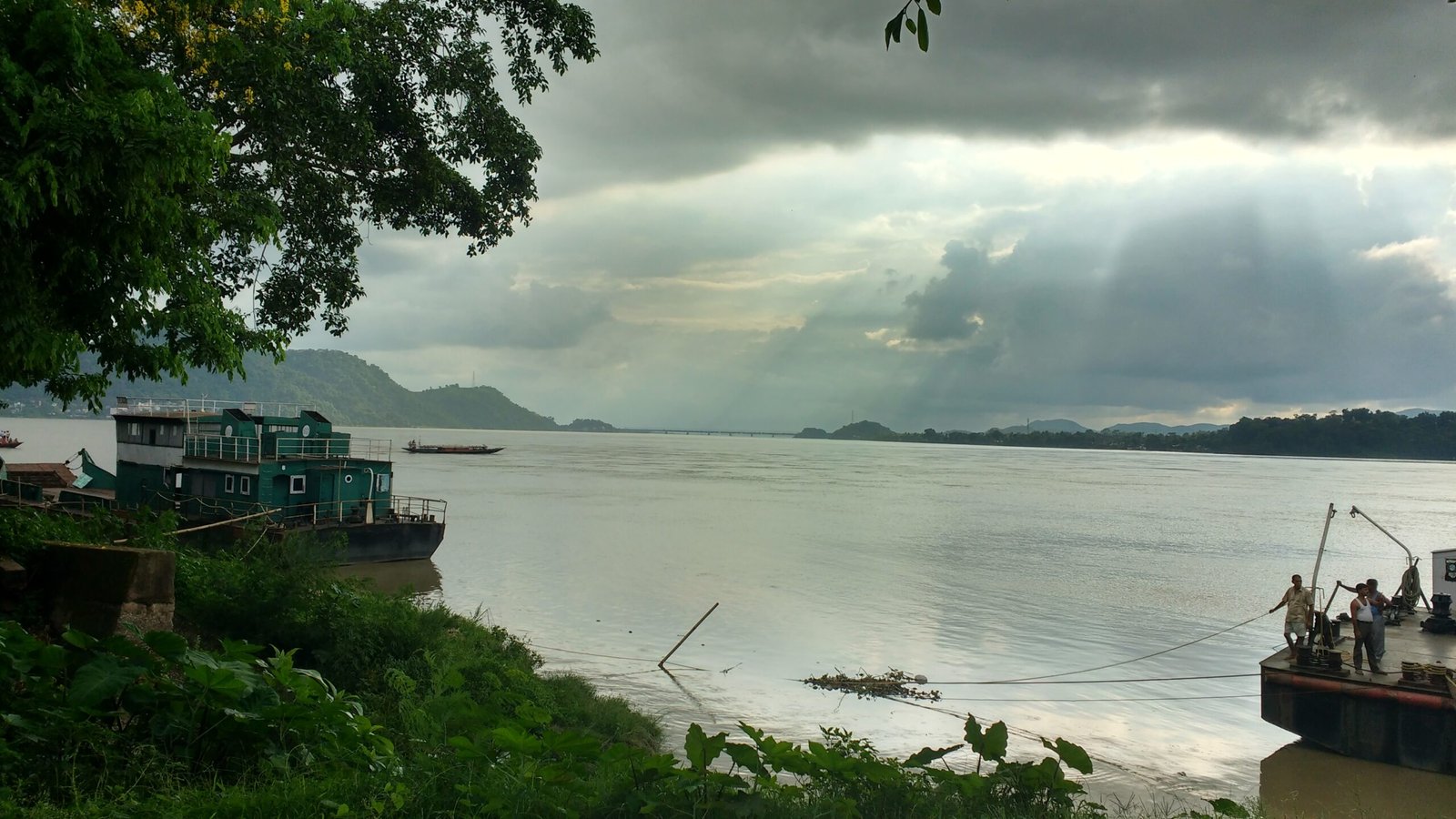
Featured image: Brahmaputra River at Guwahati, Assam. Photo by VINOYBLOG / Wikimedia Commons, used under CC BY-SA 4.0. Representative image; it does not show the proposed tunnel alignment, portal locations or construction works.