The inaugurated scheme targets 57,422 hectares in Dhar and Jhabua. Its buried pipe network and pressure requirements put pumping, electrical systems and long-term operation in focus.

The inaugurated scheme targets 57,422 hectares in Dhar and Jhabua. Its buried pipe network and pressure requirements put pumping, electrical systems and long-term operation in focus.
Madhya Pradesh inaugurated the ₹2,387.60-crore Narmada–Jhabua–Petlawad–Thandla–Sardarpur micro-lift irrigation project on 24 October 2026. The state says the scheme is intended to serve 57,422 hectares across 260 villages in Dhar and Jhabua districts, benefiting around 72,000 farmers.
For water-infrastructure contractors and equipment suppliers, the important feature is its pressurised distribution system. Water is to reach agricultural blocks through buried pipes, with farmers then using sprinkler or drip irrigation.
This is an inauguration of an existing project, not a fresh construction tender or a newly announced contract award. The state release does not establish that every farm connection has already delivered the intended irrigation outcome.
The Madhya Pradesh Department of Public Relations release, issued on 24 October, divides the intended service area into 25,422 hectares in 66 Dhar villages and 32,000 hectares in 194 Jhabua villages.
It describes a proposed lift of 186.62 million cubic metres from the Narmada at Chandan Khedi in Kukshi tehsil, and cites a 102.30 MW power requirement. The underground pipe network is designed to provide water with a 20-metre pressure head up to 2.5-hectare irrigation blocks.
The volume and power figures describe the project basis reported by the state. They are not independently measured water deliveries or electricity consumption. A megawatt figure should not be confused with the energy used over an irrigation season.
Equipment Brief analysis: lifting water into a distribution network is only part of the task. The system must also deliver a usable pressure at the locations where irrigation equipment connects.
That makes the relationship between pumps, pipework, valves and operating schedules central to performance. A service-area figure says how much land the project is intended to cover; it does not show whether the farthest or highest connection receives the required flow during simultaneous use.
Acceptance and operating records should therefore identify where pressure and flow are checked, under what demand conditions and against which contractual requirements. Those details provide a stronger basis for assessing performance than the inauguration date alone.
At this stage, the useful questions concern reliability and maintainability. Operators need access to pumping and electrical equipment, a way to isolate sections for repairs and a response plan for faults that interrupt supply.
For suppliers, replacement compatibility and local service capability deserve attention alongside the initial specification. A spare component must match the installed duty and control arrangement; a broadly similar pump or valve is not automatically an appropriate substitute.
The announcement does not name equipment suppliers, disclose a new pump order or publish maintenance packages. It should therefore be read as evidence of a substantial operating asset, rather than as a confirmed new procurement opportunity.
The state release says farmers can connect sprinkler or drip systems after water reaches the irrigation blocks. That interface deserves clear responsibility: the bulk-water system and on-farm application equipment perform different functions.
Project users need to know the available flow and pressure, connection arrangements and irrigation schedule before selecting field equipment. A pressurised supply can support efficient application, but realised results still depend on installation, operation and maintenance at the farm.
For contractors tracking future irrigation work, the project also illustrates why civil, mechanical and electrical packages should be reviewed together. Pipe installation quality, pump duty and electrical reliability all contribute to the same service outcome.
The verified development is the 24 October inauguration and the state’s published service and design figures. To assess performance beyond the formal opening, project owners and operators should publish or retain:
These operating records would provide a stronger picture of service delivery than the inauguration date alone.
Equipment Brief’s guide to L1 and letters of award explains the earlier procurement stages. This scheme has reached a different milestone, so its inauguration should not be presented as a live bid invitation.
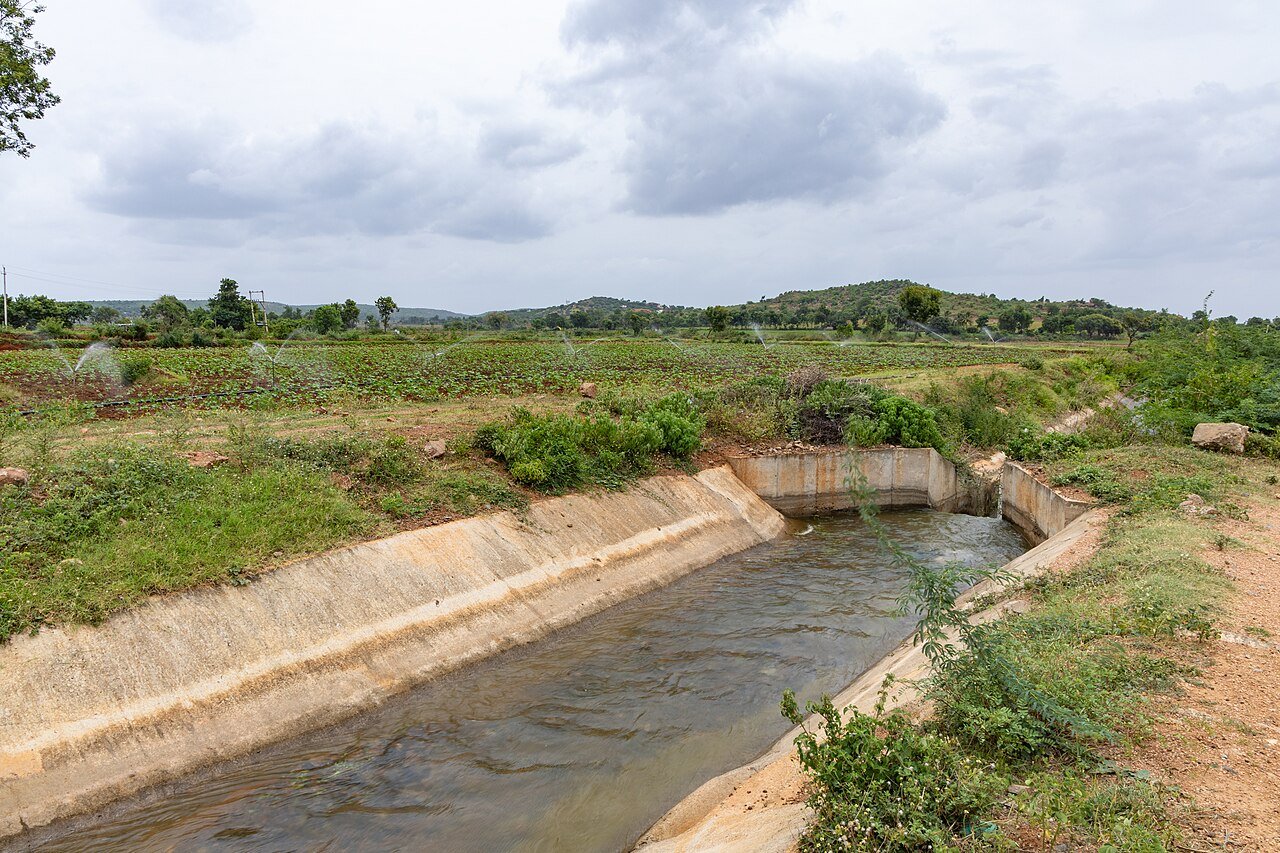
Featured photograph: sprinkler irrigation beside the Narayanpur Right Bank Canal in Raichur, Karnataka, July 2025. Representative image; it does not depict the Madhya Pradesh scheme. Photo: Vraj Acharya, WELL Labs, via Wikimedia Commons, CC BY-SA 4.0. Resized for publication; theme crops may vary. The photograph and its resized versions retain that licence.