Volvo Trucks unveiled the VNX for North America on 14 October 2026. Its D13 engine, Remote Steer and telematics are confirmed; sales timing and India availability remain unannounced.

Volvo Trucks unveiled the VNX for North America on 14 October 2026. Its D13 engine, Remote Steer and telematics are confirmed; sales timing and India availability remain unannounced.
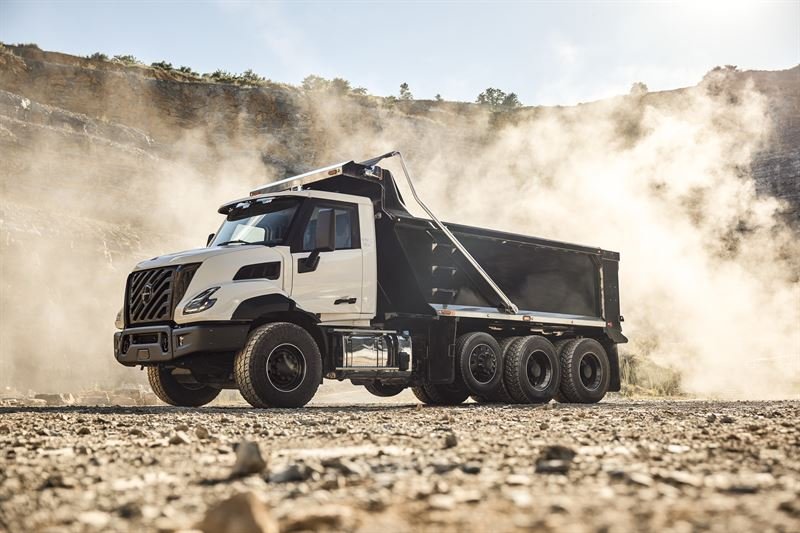
Volvo Trucks unveiled the all-new VNX vocational truck for the North American market on 14 October 2026, targeting construction haulage, concrete transport and heavy-duty site work. The company has not yet announced the truck’s start-of-sales date.
Volvo’s official launch release says the start of sales will be announced later this year. Equipment Brief has not independently confirmed first customer orders or deliveries. The announcement concerns North America; the reviewed releases do not announce an Indian launch, price or delivery programme.
That distinction matters for Indian contractors. The VNX is a useful view of how a major manufacturer is combining jobsite manoeuvring, driver assistance and connected maintenance, rather than a machine that can be assumed available through an Indian dealer today.
Volvo’s North American announcement lists a D13 engine rated at up to 540 hp and 1,950 lb-ft of torque, with engine braking of up to 630 braking hp. These are maximum manufacturer ratings, not a statement that every specification carries the same output.
The release describes heat-treated frame rails and a clear layout behind the cab for body installation. Standard forward pedestrian detection and optional blind-spot detection on both sides address the close interaction between trucks, workers and other machines. The announcement also introduces Remote Steer, allowing an operator outside the cab to control the truck at speeds up to 5 mph.
Remote Steer is an operator-controlled function. It should not be described as autonomous driving or evidence that a truck can operate without a trained person overseeing its movements.
Equipment Brief analysis: the usefulness of a vocational chassis depends heavily on the completed vehicle. A concrete mixer, tipper or heavy-haul tractor places different demands on weight distribution, auxiliaries, access and maintenance.
For a contractor comparing trucks, engine power is only the starting point. The review should include the body’s working envelope, axle loads, turning space and the route between the loading face and discharge point. A nominally powerful truck can lose productive time if its body arrangement complicates site access or servicing.
The same applies to engine braking. A high published braking rating is relevant to downhill operation, but it does not replace a route assessment, a suitable gear strategy or the completed vehicle’s permitted operating limits.
External control may improve an operator’s view of a confined manoeuvre, but the operating position, exclusion area and communication procedure remain important. Project managers evaluating such a feature should ask how control is transferred, how the vehicle stops if communication is lost and where other workers may stand.
Those are questions for the manufacturer’s operating instructions and site assessment. A low speed alone does not establish that a manoeuvre is safe. The practical value of the feature should be assessed against a specific task, rather than treated as a general productivity promise.
Volvo’s global launch release describes a factory-installed 4G gateway supporting Remote Diagnostics and over-the-air Remote Programming. These functions can help a fleet organise faults and software work, but their value depends on connectivity, service response and the operator’s maintenance process.
An Indian fleet assessing comparable technology should ask who receives an alert, who decides whether a truck can continue working and how quickly the workshop can respond. Collecting a fault code has limited benefit if it does not lead to an appropriate action.
That operating question also runs through Equipment Brief’s report on Yanmar’s SmartAssist Remote update. The systems serve different machines and markets; the shared issue is how data reaches the person responsible for uptime.
The VNX’s immediate commercial story is North American. Its broader relevance is the integration of chassis engineering, body installation, low-speed control and maintenance support in construction transport. Indian buyers should use those themes to frame their own specifications while seeking written confirmation of locally offered models, support and equipment configurations.
These checks help separate a published feature from a fleet-level benefit that depends on the body, route, maintenance process and local support.
Featured photograph: the all-new Volvo VNX in the official October 2026 launch media supplied by Volvo Trucks through its press announcement. Credit: Volvo Trucks. Used for editorial coverage of this product; copyright remains with the rights holder.