Construction equipment is gaining more digital capability, but the technologies do different jobs.

Construction equipment is gaining more digital capability, but the technologies do different jobs.
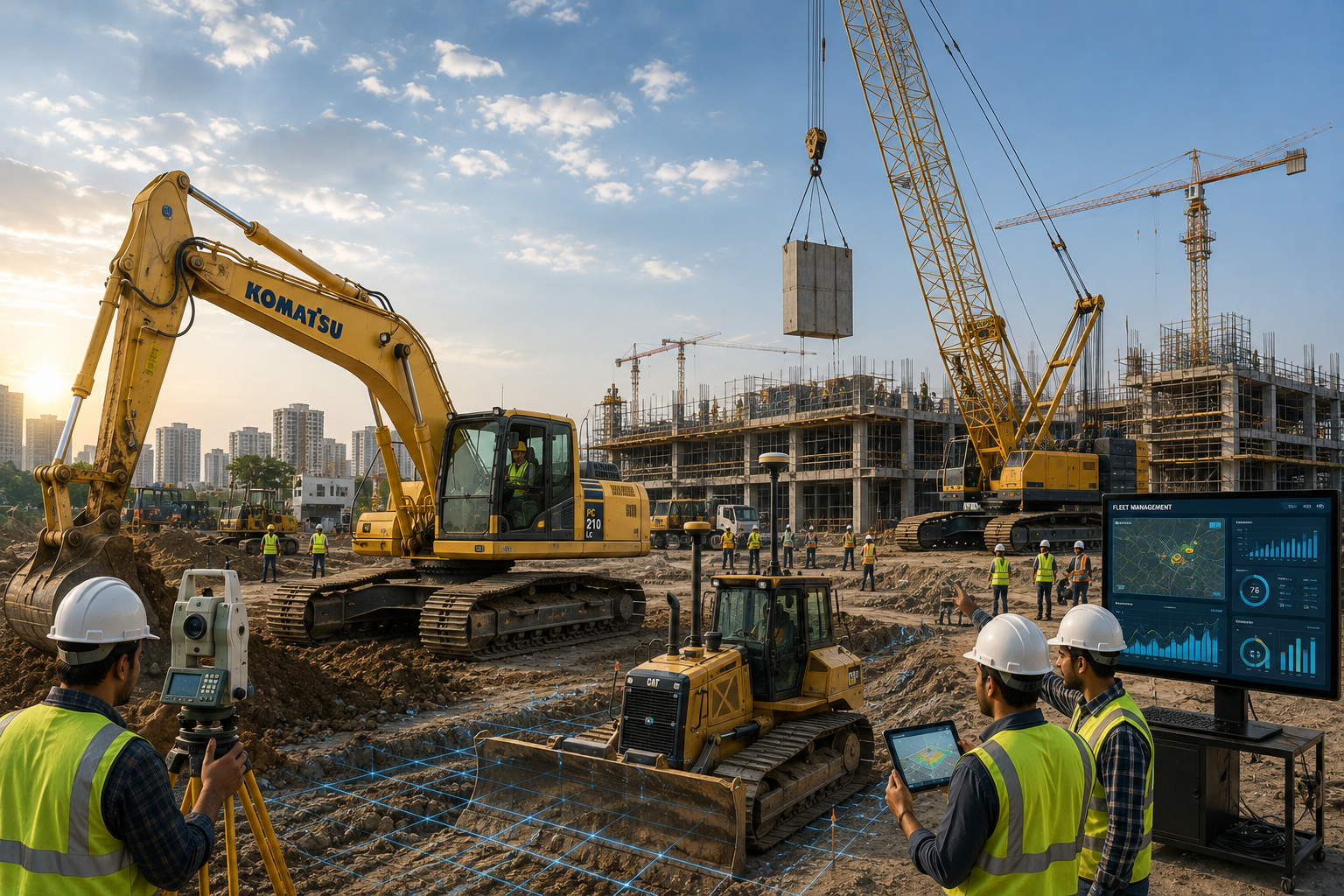
Machine-control systems help operators work to digital designs. Telematics provides information on utilisation, fuel consumption and machine condition. Connected platforms link machine data with project information, while newer autonomous systems are beginning to move into commercial deployment.
The productivity gains are therefore tied to specific machine functions and site workflows rather than to technology alone.
Excavators are one of the clearest examples of this shift.
Komatsu’s Intelligent Machine Control 3.0 combines sensors, GPS, hydraulics and software to help operators work to digital plans. Its functions include Auto Swing, Swing-to-Line, Travel-along-Line, 3D Boundary Control and Auto Stop. The system also captures as-built information from machine passes. (komatsu.com)
Komatsu says the system can help prevent over-excavation, reduce the number of passes required and reduce rework. It can also reduce reliance on conventional staking and grade-checking activities. These are manufacturer-stated benefits of the system rather than independent productivity measurements. (komatsu.com)
IMC 3.0 is not a fully autonomous excavation system. Komatsu describes it as semi-automatic operation, with the operator remaining responsible for machine operation. (komatsu.com)
JCB takes a different approach through IntelliControl and LiveLink. Its current India excavator documentation lists operating information including fuel quantity, engine speed, operating mode and auto-idle status. LiveLink adds utilisation, idle-time, machine-health, maintenance and geofencing information. (jcb.com)
Digital machine control also extends beyond excavation.
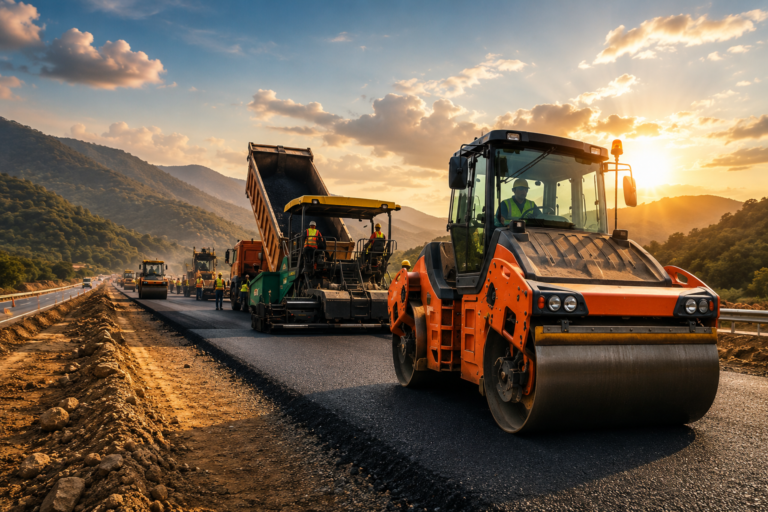
Komatsu’s Intelligent Machine Control integrates 3D design information into compatible equipment, allowing operators to work against the digital surface while the machine-control system assists with positioning and grading. (komatsu.com)
The broader Smart Construction system connects machine and project information. Smart Construction Dashboard can combine design files, drone data and machine as-built information to create a 3D view of the site and compare planned and completed work. (komatsu.com)
That creates a direct link between the digital design, machine activity and the completed surface. For earthmoving contractors, the benefit is better visibility into whether work is progressing to plan.
Machine productivity also depends on how equipment is used between production cycles.
JCB LiveLink provides data on machine utilisation, fuel consumption, idle time, location and maintenance. Its current LiveLink platform also provides operational analytics covering areas such as attachment utilisation, excavation modes, travel and swing time and fuel use. (jcb.com)
This data can help fleet managers identify machines with high idle time or operating patterns that require investigation.
JCB says LiveLink currently connects more than 580,000 machines worldwide and supports more than 40,000 customers. The company also says the platform can integrate data from more than 22 telematics systems for mixed-fleet management. (jcb.com)
Telematics does not itself increase output. Its role is to provide operating information that contractors can use when reviewing machine deployment, utilisation and maintenance.
Connected equipment can also provide information that supports maintenance planning.
JCB LiveLink provides critical health alerts and maintenance reminders alongside machine monitoring. (jcb.com)
The system does not replace scheduled servicing or physical inspections. Instead, it adds machine-generated information to the maintenance process and can help identify equipment requiring attention.
For a fleet spread across several projects, this can give maintenance teams a clearer picture of machine condition without depending entirely on manual reporting from individual jobsites.
The next step is combining machine information with project information.
Komatsu’s Smart Construction Dashboard can bring together 3D design data, drone information and as-built machine data. The result is a digital view of the jobsite that can be used to compare planned surfaces with completed work. (komatsu.com)
Komatsu has also positioned Smart Construction for mixed fleets, extending the system beyond machines carrying the Komatsu name. (komatsu.com)
This matters because site productivity is not determined by an individual machine alone. Excavation output depends on truck availability, material movement, work sequencing and the accuracy of the planned surface. Connecting machine and project data gives managers more visibility across that workflow.
Digital technology has a different role in lifting operations.
A crane’s maximum rated capacity does not represent its capacity at every working condition. The allowable load changes with factors such as working radius, boom configuration, counterweight and ground-support conditions.
Digital crane-management systems can assist by monitoring machine configuration and lifting conditions, but the article’s current evidence base does not support attributing a specific productivity improvement to a particular crane system. The core planning principle remains the same: crane performance has to be considered against the actual lift plan rather than headline capacity.
There is a clear distinction between machine-control assistance and autonomous construction.
Komatsu’s IMC 3.0 provides semi-automatic functions on excavators. That is different from a machine operating autonomously without continuous operator control. (komatsu.com)
On July 31, 2026, Komatsu and EARTHBRAIN announced a strategic partnership with AIM Intelligent Machines to develop autonomous solutions for bulldozers and hydraulic excavators. Komatsu said the collaboration had already entered the commercial deployment phase in the United States, with autonomous machines operating at customer jobsites. The companies plan to begin introducing the solution in Japan from 2027. The technology can also be retrofitted to existing bulldozers and hydraulic excavators. (komatsu.com)
That puts autonomy at a different stage of development from established telematics and machine-control systems. Telematics is already used for monitoring and fleet management. Machine control is available on current production equipment. Autonomous operation is now entering commercial deployment in specific applications and markets.
Technology works best when it addresses a defined production problem.
On an excavator, machine control can help the operator work to a digital surface and reduce over-excavation and rework, according to Komatsu. Telematics can show how the machine is being used and when it requires maintenance. A connected platform can compare design information with as-built results. (komatsu.com)
The same principle applies to the wider fleet. A machine can have high utilisation without producing efficiently if trucks are delayed or the site layout creates excessive travel. A highly automated machine can still be limited by material supply, access or project sequencing.
Modern equipment technology is therefore less about adding digital features to machines and more about connecting machine operation with the work being carried out.
For contractors, the practical gains come from better control of excavation and grading, clearer utilisation data, more visible machine-health information and stronger links between digital plans and physical work.