NBCC’s ₹9,600-crore Supertech tender programme has package deadlines on 2 and 4 November. Check current tender IDs and corrigenda before bidding.

NBCC’s ₹9,600-crore Supertech tender programme has package deadlines on 2 and 4 November. Check current tender IDs and corrigenda before bidding.
NBCC has floated 25 construction and related-work tenders worth more than ₹9,600 crore to revive 16 stalled Supertech housing projects. For civil contractors, specialist subcontractors and equipment suppliers, the opportunity is unusually large—but it remains at the competitive tender stage.
NBCC’s 6 October 2026 announcement says the 16 projects span Uttar Pradesh, Haryana, Uttarakhand and Karnataka and include nearly 50,000 stalled homes. The Government of India ePublishing portal lists the individual NBCC packages and their bid dates.
Procurement status: open tenders
NBCC has invited bids. The cited records do not identify an L1 bidder, issue a letter of acceptance or award, create a work order, or confirm site mobilisation. Suppliers should treat bidder enquiries as pre-award until the relevant package advances.
NBCC says it is the project management consultant for completing the Supertech portfolio. The National Company Law Appellate Tribunal appointed it in December 2024, and the Supreme Court upheld the mandate in February 2026, according to the company’s release.
The 25 procurements cover balance construction and associated services across projects such as Eco Village I, Eco Village II, Eco Village III, Sports Village, North Eye, Romano, Araville, Upcountry, Hill Town and developments in Meerut. The ePublishing records describe many packages as lump-sum, two-cover works tenders and use “as is where is” wording—important because bidders must understand the condition and interfaces of partially built structures rather than price a clean greenfield site.
The ₹9,600-crore figure is an aggregate programme value, not one contract and not an awarded order book. Each package has its own tender ID, security requirement, schedule, qualification documents and submission deadline.
These examples come directly from the public tender records and should not be extrapolated to the other packages. Bidders must use the package-specific notice inviting tender, bill or price schedule, drawings and technical conditions.
As checked on 26 October 2026, the Government of India ePublishing portal shows current listings for Meerut Sports City, Araville, an Eco Village II package and Upcountry Package III with bid submission due on 2 November 2026 at 11:00 am and opening at 11:30 am. Fresh records for Araville, Eco Village II Package III and Upcountry Package III were published on 26 October under new tender IDs. The portal also shows the earlier Corr-Adm-02 records for Araville, Meerut Sports City and Upcountry Package III with 26 October dates. Bidders should confirm the latest active tender ID and documents for their exact package rather than assume an old record or downloaded tender set still governs.
Other listed Supertech packages continue to show 4 November deadlines, but each package’s latest official record must be checked separately. Corrigenda and re-tendering can change the controlling reference as well as the closing date.
Stalled-project completion is materially different from starting on an empty site. Before pricing, contractors will need to reconcile available surveys and documents with the physical condition of existing foundations, frames, façades, services, temporary works and stored materials. Interfaces between old and new work can affect methods, productivity and liability.
Key diligence questions include:
A lump-sum form increases the importance of this review. Equipment suppliers quoting to bidders should ask whether crane plans, concrete logistics, hoist demand and finishing sequences are based on verified site conditions or only preliminary assumptions.
The official notices define civil and balance-construction scopes but do not publish a fleet schedule. Subject to the successful bidders’ methods, the programme may create demand for tower cranes, passenger-and-material hoists, concrete pumps, batching and transit-mixing support, mobile cranes, access platforms, generators, dewatering equipment and material-handling fleets.
There is also likely to be specialist work around structural repairs, waterproofing, façades, mechanical-electrical-plumbing systems, fire protection, lifts, external development and testing. However, no supplier should convert the ₹9,600-crore programme value into assumed machine quantities. Actual demand will depend on package awards, construction sequencing, the condition of each site and what winning contractors own versus rent.
Equipment Brief’s guide to L1 versus LoA in Indian works tenders explains why even a lowest-bidder result is not mobilisation. For a wider contractor-market view, see the analysis of Indian construction order books and execution capacity. Contractors comparing large live opportunities can also review the ₹6,792.52-crore Hyderabad–Vijayawada highway tender.
The programme is consequential because it brings a large distressed-housing portfolio into active procurement. But the next evidence point is not publicity around the aggregate value; it is package-level tender evaluation, followed by L1 identification, acceptance or award, contractual formalities and then mobilisation.
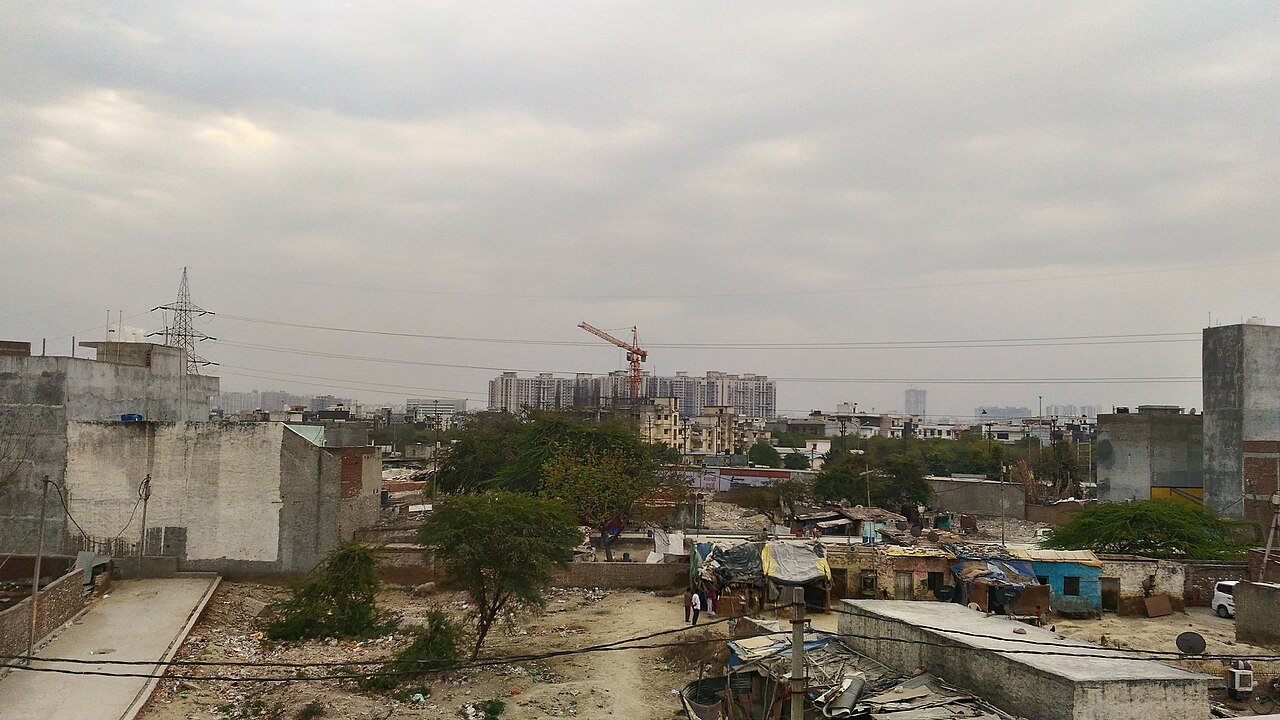
Featured image: A construction view in Noida, Uttar Pradesh, photographed by SWAPNA SOURAV. Via Wikimedia Commons, licensed under CC BY-SA 4.0. The image is illustrative and does not depict a specific Supertech package covered by these tenders.