NITI Aayog’s new data-centre framework asks states to test grid, water, land, connectivity and economic readiness before approving large data-centre proposals.

NITI Aayog’s new data-centre framework asks states to test grid, water, land, connectivity and economic readiness before approving large data-centre proposals.

NITI Aayog’s Frontier Tech Hub has released a Data Centre Evaluation Framework asking states to assess power, water, land, connectivity and wider infrastructure readiness before supporting new data-centre projects. The framework was released on 14 October 2026 and announced by the government on 15 October.
The Press Information Bureau release describes it as a decision-support tool for state governments, not a new national approval law. Its purpose is to help states evaluate data-centre proposals against infrastructure availability, environmental sustainability, economic value and implementation readiness.
The NITI Aayog framework is organised around five pillars:
For construction and infrastructure companies, this makes the framework relevant well beyond the IT equipment inside a data centre. A large campus depends on substations, transmission connections, backup power, cooling infrastructure, water systems, fibre routes, roads and substantial civil and MEP works.
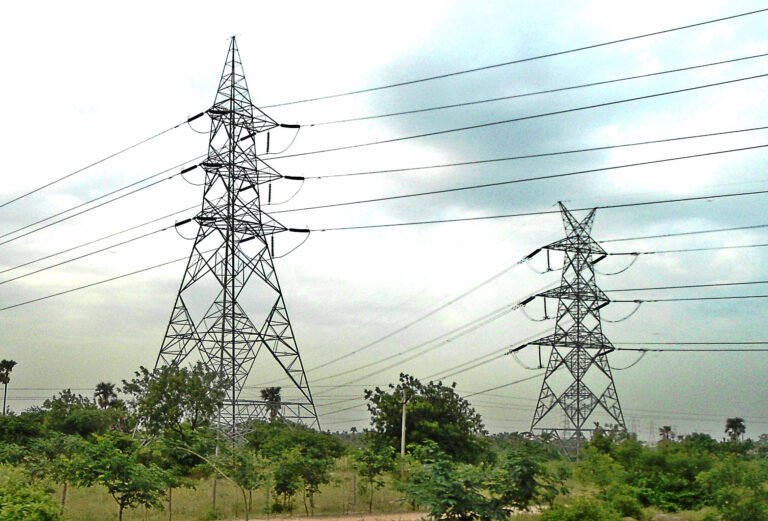
The framework recommends that developers, distribution companies and state transmission utilities jointly validate a power-readiness and ramp-up plan for the full campus. It asks states to examine sanctioned load, energisation milestones, substation and transmission augmentation, lead times and responsibility for upgrades.
It also calls for load-flow studies covering feeder limits, voltage and power-factor considerations, contingency conditions and loading at relevant 132 kV, 220 kV and 400 kV substations. For facilities above 20 MW, it recommends automated demand-response readiness and grid-control integration, subject to applicable grid codes.
This creates a direct link between data-centre growth and investment in electrical infrastructure, an area Equipment Brief also tracks through India’s Green Energy Corridor Phase III.
NITI Aayog says states should assess basin-level water stress, public-supply impacts, backup sources and lifecycle risks before construction. The recommendations include rainwater harvesting, on-site treatment and storage, along with lifecycle planning for batteries, e-waste and other hazardous waste.
The framework also proposes data-centre-ready zones where land title, zoning, grid, water, fibre and clearance readiness are assessed in advance. It recommends that states identify high-risk or exclusion areas where hazards, water stress or inadequate infrastructure make development unsuitable.
Equipment Brief analysis: if states adopt the framework in project screening, more data-centre proposals may arrive with defined infrastructure-enablement packages instead of treating power, water and connectivity as issues to solve after land allocation.
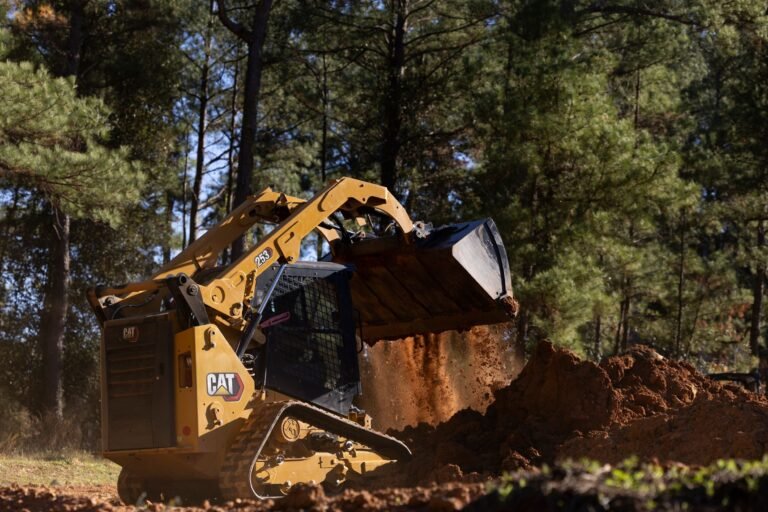
That could improve visibility for EPC contractors, electrical contractors, cooling specialists and suppliers of earthmoving, lifting, concrete and material-handling equipment. It may also increase the importance of project sequencing because capacity additions would be linked more closely to substations, transmission works, water systems and other enabling infrastructure.
Equipment Brief has previously examined why India’s data-centre build-out is an engineering and construction story, not only a technology investment cycle.
The document does not itself approve a particular data centre, award an EPC package or commit state infrastructure spending. Project-level land, power, water, environmental and construction approvals still depend on the relevant authorities and applicable rules.
For contractors and suppliers, the practical next step is to watch how individual states translate the framework into approval matrices, data-centre-ready zones, utility augmentation plans and procurement packages.
Featured image: Equipment Brief illustration of data-centre construction, power and cooling infrastructure.