NHAI’s independent design-checking policy for major bridges and critical highway structures starts on 1 December 2026. Here is what changes for project teams.

NHAI’s independent design-checking policy for major bridges and critical highway structures starts on 1 December 2026. Here is what changes for project teams.
NHAI’s new independent design-checking policy for major bridges and other critical National Highway structures will take effect on 1 December 2026. It creates a uniform verification mechanism across new EPC, HAM and BOT projects, with checks carried out by empanelled IITs, government technical institutions and experienced bridge-engineering firms.
The Ministry of Road Transport and Highways announced the policy on 15 October 2026. It applies to all new projects under the three delivery models and to projects where design verification or proof checking has not yet started.
What this is—and is not
This is a project-wide quality-assurance policy, not a tender award, contractor appointment or work order. It changes how identified critical designs are independently reviewed before NHAI’s contractual review or approval.
NHAI says the independent-checking system will cover:
Projects where design verification or proof checking is already complete will generally remain outside the policy. However, NHAI retains the option to require additional independent verification for major bridges and complex or critical special structures.
That transitional rule matters. Contractors and concessionaires should not assume that a project is exempt simply because construction procurement has already concluded. The relevant question is whether proof checking for the identified structure has begun or been completed and whether NHAI requires additional review under the contract.
The announced process separates independent technical scrutiny from NHAI’s contractual approval role:
The policy therefore does not transfer design responsibility to an IIT or checking consultant. Project participants still need to read their contract, allocate design interfaces clearly and close review comments before construction reaches affected hold points.
An earlier NHAI announcement from 30 June 2026 described the planned institutional framework in more technical terms. It said independent proof checking would include structural design calculations, engineering drawings, construction methodologies, geotechnical investigations and hydraulic studies.
The June announcement also said major bridges are designed for service lives of 100 years or more and named IIT Delhi, IIT Bombay, IIT Roorkee and IIT Kharagpur among roughly 12 IITs and other institutions that had expressed willingness to collaborate.
For contractors, this means design packages need more than a set of final drawings. Calculations, investigation data, assumptions, construction-stage methods and revision records must be organised so an independent team can reproduce the engineering logic and reconcile drawings with the proposed method.
The policy can affect pre-construction sequencing even though NHAI’s release does not prescribe one universal review duration. Project teams should identify critical submissions early, allow time for independent comments and avoid committing permanent works before the relevant approvals are in place.
Useful controls include:
This is especially relevant where bridge engineering depends on site-specific river behaviour, scour assumptions, foundation conditions, seismic demand or staged construction. A late design change can alter piling, cofferdam, crane, launching-girder or concrete-placement plans even if the main alignment and package value remain unchanged.
The policy does not specify equipment brands, capacities or quantities. Still, independent review can influence when project-specific equipment requirements become firm.
Before reserving or configuring plant, suppliers and rental companies should ask:
These checks reduce the risk of treating a preliminary construction method as a confirmed equipment order. Equipment Brief’s guide to L1 versus LoA in Indian works tenders provides the parallel commercial-stage checks suppliers should make before mobilisation.
Independent design verification complements rather than replaces construction quality control. Design scrutiny cannot substitute for material testing, workmanship inspection, survey control, equipment suitability or monitoring of the built structure.
NHAI has separately ordered special quality inspections on 17 low-bid highway projects, illustrating the difference between checking engineering before construction and inspecting execution on site. Equipment teams can also review the application context in Equipment Brief’s guide to road-construction equipment used across India’s highway programme.
As of 18 October 2026, NHAI’s announced effective date remains 1 December. Project teams should watch for project-specific directions, empanelment details or subsequent circulars and rely on their contract and NHAI instructions for the controlling requirements.
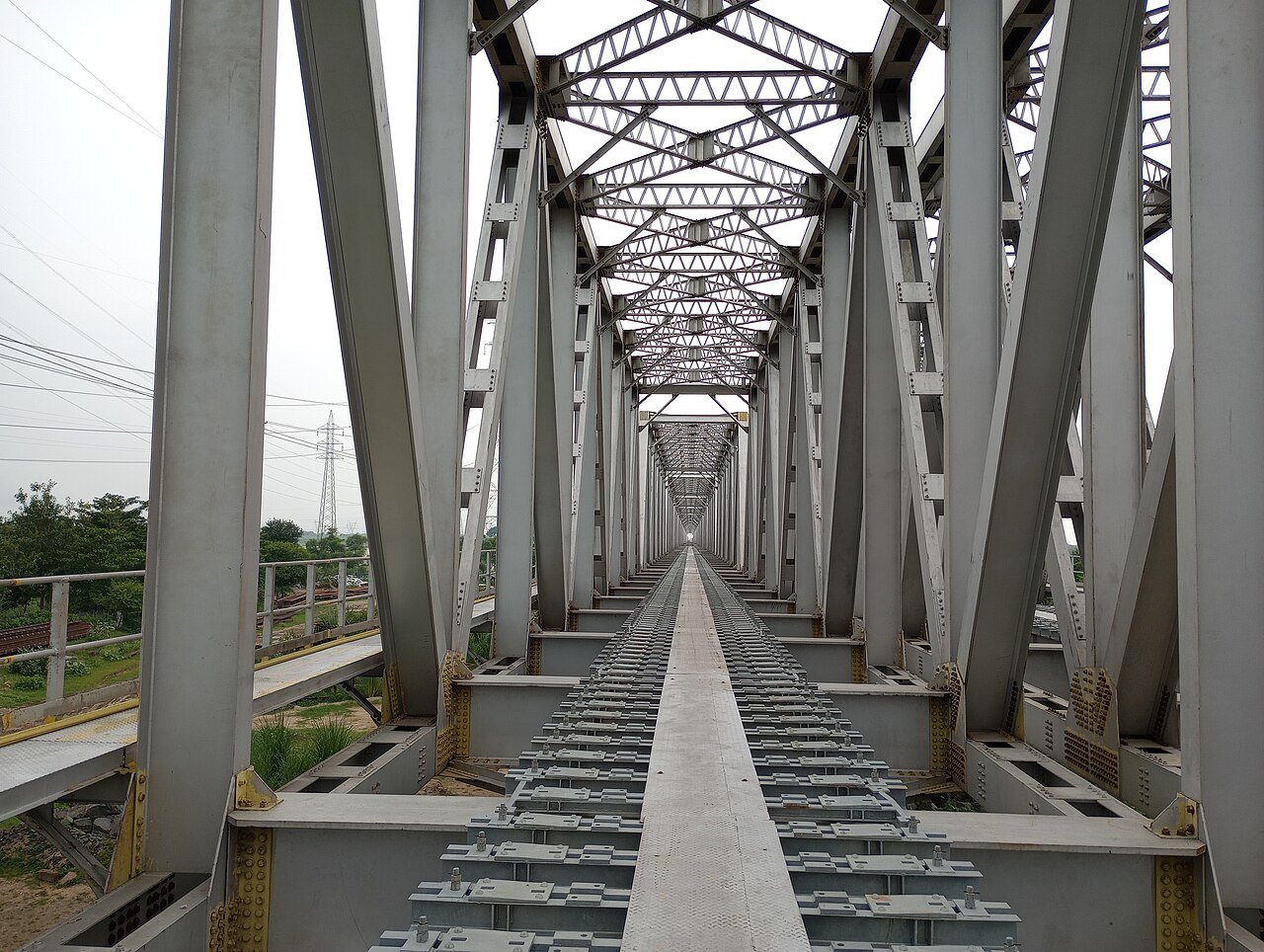
Featured image: Bridge construction in Prayagraj, Uttar Pradesh. Photograph by Satyadeo1993 via Wikimedia Commons, licensed under CC BY-SA 4.0. The image is illustrative and does not depict a structure reviewed under the new policy.