Epiroc reported 15% higher Q3 orders, with mining customers accounting for 83% of intake. Equipment orders grew 16% organically as its Nashik manufacturing expansion progressed.

Epiroc reported 15% higher Q3 orders, with mining customers accounting for 83% of intake. Equipment orders grew 16% organically as its Nashik manufacturing expansion progressed.
Epiroc’s third-quarter 2026 results point to stronger mining-equipment demand, led by underground machines and aftermarket services. The Swedish manufacturer reported group orders received of SEK 17.467 billion for the quarter ended 30 September, up 15% year on year and 12% organically. Mining customers accounted for 83% of group order intake, compared with 78% a year earlier, while demand from infrastructure customers remained stable, according to the company’s Q3 interim report released on 28 October 2026.
For equipment buyers and contractors, the more useful detail is the mix behind the headline: equipment orders grew 16% organically, service orders increased 13%, and Epiroc highlighted underground equipment, mid-life rebuilds, automation and safety solutions. These are global group figures; the report does not disclose a separate India order-growth rate.
| Measure | Q3 2026 | Year-on-year comparison |
|---|---|---|
| Orders received | SEK 17.467 billion | +15% reported; +12% organic |
| Revenue | SEK 16.775 billion | +10% reported; +7% organic |
| Operating profit | SEK 3.411 billion | +22% |
| Operating margin | 20.3% | 18.4% in Q3 2025 |
| Equipment orders | +16% organic | Supported by underground-equipment demand |
| Service orders | +13% organic | Mid-life rebuilds and digital solutions contributed |
| Operating cash flow | SEK 1.438 billion | SEK 2.476 billion in Q3 2025 |
Source: Epiroc Interim Report Q3 2026. Organic growth excludes currency and structural effects. SEK figures shown in billions have been converted from the report’s MSEK presentation.
Epiroc said mining customers represented 83% of group orders received in Q3, up from 78% in the corresponding quarter of 2025. Infrastructure customers accounted for the remaining 17%, compared with 22% a year earlier. The company described infrastructure demand as stable, so the quarter’s order growth was primarily a mining-led development rather than evidence of a broad-based infrastructure upswing.
Within the Equipment & Service business area, orders received increased 19% to SEK 13.570 billion, including 15% organic growth. Equipment orders rose 16% organically to SEK 6.224 billion. Epiroc attributed the increase to strong demand for underground equipment and said interest in its diesel-electric solutions continued to strengthen.
The quarter included a SEK 610 million order from MMG for the expansion of the Khoemacau Copper Mine in Botswana. Epiroc described it as the second-largest equipment order in its history. The report does not disclose the equipment quantities or a machine-by-machine scope for this order, so those details should not be inferred.
Orders in local currency increased in Asia/Australia, Africa/Middle East and North America, while they declined in South America and Europe. Epiroc said Asia/Australia recorded the strongest regional growth. The published group report does not isolate India within that regional figure.
Service orders grew 13% organically, with Epiroc pointing to mid-life rebuilds and digital solutions for automation and safety. This matters to fleet owners because aftermarket work can extend the useful life of installed equipment and support productivity without requiring every requirement to be met through new-machine purchases.
Service represented 54% of Equipment & Service orders in the quarter, while the aftermarket accounted for 67% of group revenue. For mine operators, the figures reinforce the importance of parts availability, rebuild capability, maintenance planning and technical support when evaluating a fleet over its operating life.
Equipment Brief has previously covered the Epiroc Scooptram ST10 P underground loader upgrade and the long-running Hitachi EX5500-6 mining excavator at the Moatize mine. Those machine-level stories provide context for the equipment and lifecycle issues behind the latest results.
Epiroc said the expansion of its manufacturing capabilities in Nashik, India, was making good progress. The Q3 report does not provide an investment value, additional capacity, product lines, employment figure or commissioning date. It would therefore be premature to attach a production target or a specific model to the expansion.
The India relevance is strategic rather than a confirmed new order announcement. A stronger manufacturing footprint can matter to regional supply chains, but buyers and suppliers will need further company disclosures to understand what will be produced in Nashik, when additional capacity will become available and how it may affect local sourcing or delivery arrangements.
The report also describes a technology launch that uses 3D LiDAR to enable autonomous mine trucks to operate across underground and surface environments. Epiroc said the approach is intended to support end-to-end autonomous haulage and reduce manual interventions. The report does not identify a commercial product name, customer deployment schedule or India availability, so the development should be treated as a technology direction rather than a confirmed local rollout.
For mine operators assessing automation, the practical questions remain site-specific: route control, communications coverage, traffic management, safety systems, fleet integration and the ability to manage transitions between operating environments. Equipment Brief’s wider analysis of electrification, automation and AI in construction equipment examines the broader shift.
Epiroc’s operating profit increased 22% to SEK 3.411 billion and its operating margin improved to 20.3%, from 18.4% in Q3 2025. The adjusted operating margin was 20.4%, compared with 19.0% a year earlier. The company attributed the improvement to higher volumes and efficiency measures.
Operating cash flow moved in the opposite direction, falling to SEK 1.438 billion from SEK 2.476 billion. Epiroc said more inventory had been tied up following a period of strong equipment orders; higher working capital and taxes paid also affected cash flow. Net working capital increased 22% year on year to SEK 27.504 billion.
This is an important qualification to the order-growth headline. Strong demand and higher margins do not automatically translate into stronger cash conversion in the same quarter. Epiroc said production ramp-up was progressing according to plan and delivery times were normal, so the cash-flow movement should not be presented as evidence of a delivery problem.
The report provides a positive global signal for underground mining equipment, rebuilds and digital services, but it does not establish the pace of Indian orders. The Nashik expansion is the clearest India-specific point, and further details will be needed before buyers can assess its effect on local product availability.
For comparison, Equipment Brief’s review of Caterpillar’s Q3 2026 results tracks a different equipment mix, including construction-industry sales. Read together, the reports show why mining and construction demand should be assessed by business segment rather than treated as one market.
Group orders received increased 15% year on year to SEK 17.467 billion. Organic growth was 12%.
Mining customers represented 83% of group orders received in Q3 2026, compared with 78% in Q3 2025.
No investment value or added-capacity figure was provided in the Q3 report. Epiroc said the expansion of its manufacturing capabilities in Nashik was progressing well.
No. The report provides global and regional figures, but it does not disclose a separate India order-growth rate. The Nashik expansion is an India-specific update, not an India sales figure.
Primary source: Epiroc Interim Report Q3 2026, released 28 October 2026. The full 28-page interim report is available from Epiroc’s financial publications page.
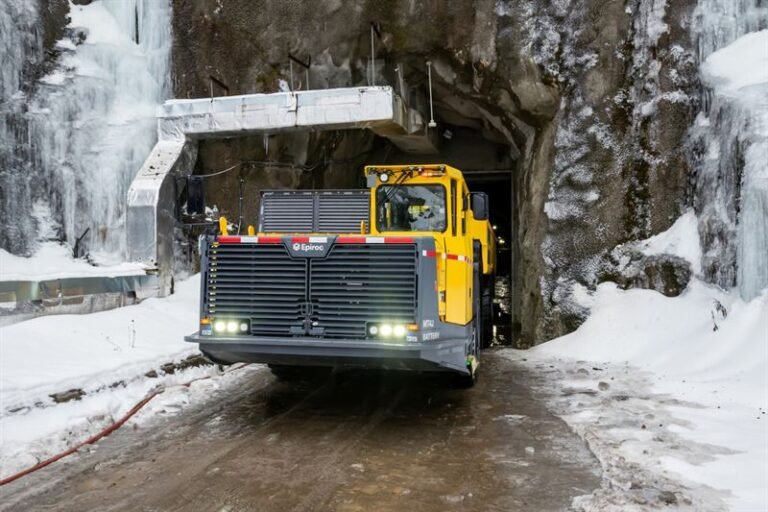
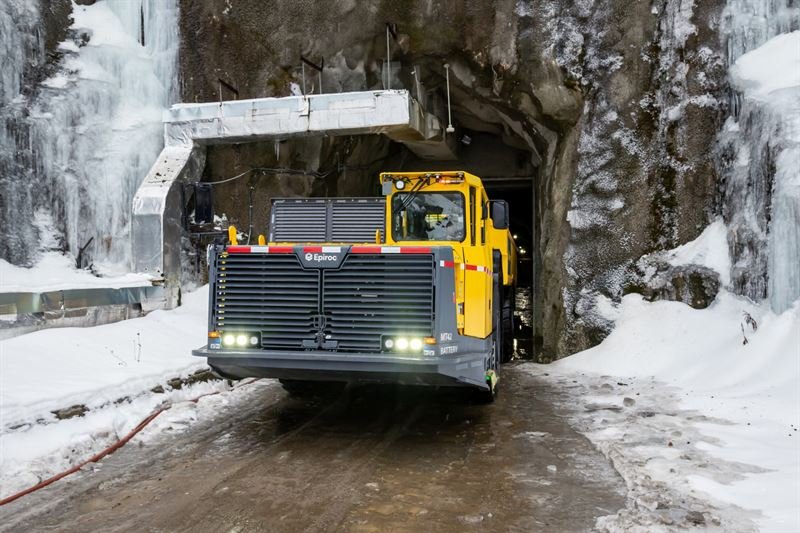
Featured image: Epiroc Minetruck MT42 Battery. Official photograph supplied with Epiroc’s Q3 2026 interim report; used to illustrate the company’s underground mining equipment portfolio.