Construction equipment is becoming more closely integrated with digital systems

Construction equipment is becoming more closely integrated with digital systems
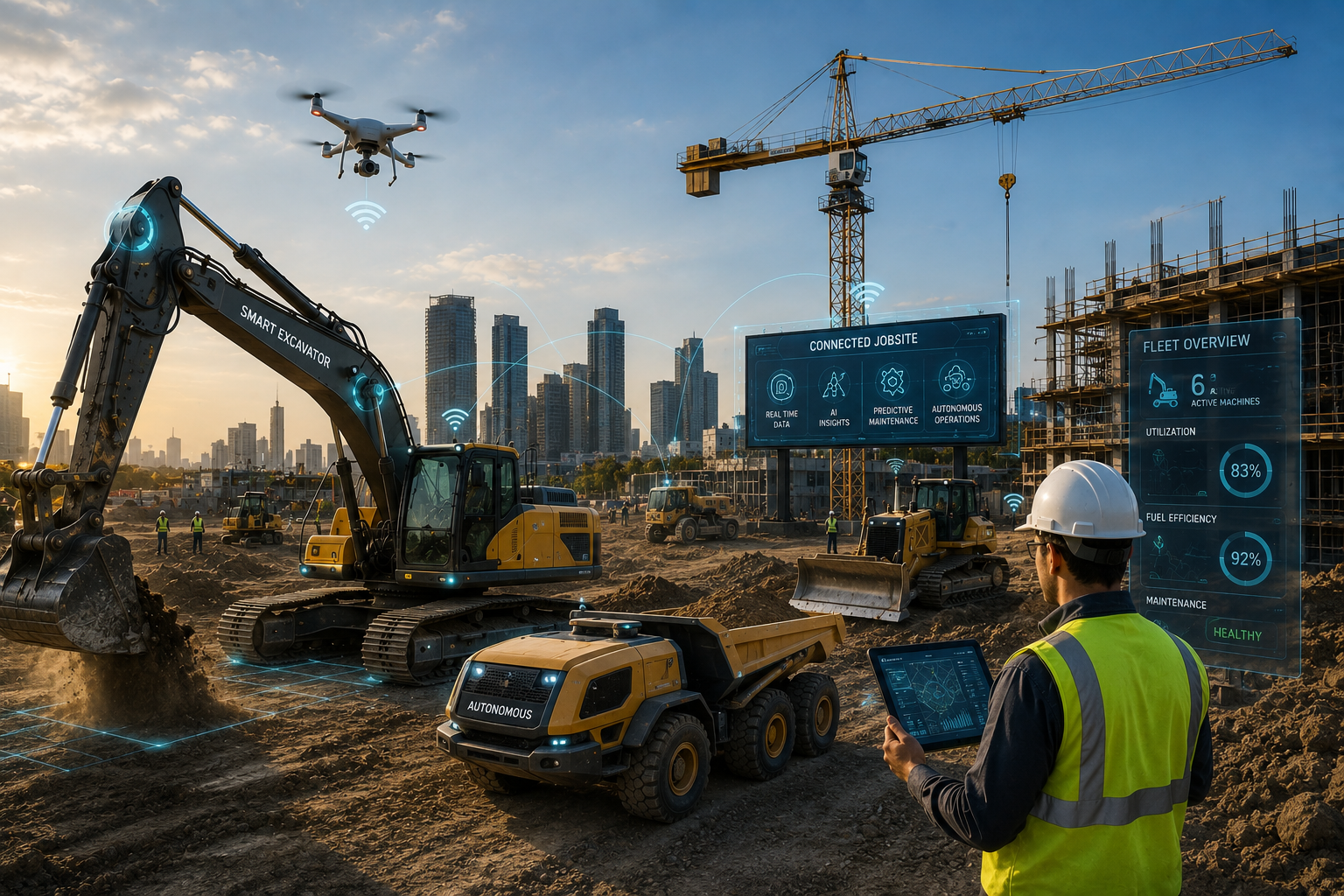
Telematics now provides machine-location, utilisation and maintenance data. Machine-control systems connect equipment with positioning and digital site information. Highway agencies in India are testing automated and machine-aided construction methods, while equipment manufacturers are adding AI-assisted safety functions, remote diagnostics and software-management tools.
The change is taking place at different levels. Most construction machines still require an operator, but the machine is no longer operating as an isolated asset.
JCB’s LiveLink platform provides machine location, utilisation, fuel consumption, maintenance and security information. JCB says more than 580,000 machines worldwide are connected to LiveLink. (jcb.com)
The system also supports functions such as geofencing, out-of-hours alerts, maintenance notifications and operating-hour data. JCB’s recent LiveLink updates include integration with other machine technologies, including IntelliSense, its AI-based system for detecting pedestrians in defined risk areas. (jcb.com)
In August 2026, JCB announced that LiveLink would become standard on its mini excavators and site dumpers, with a five-year subscription included. (jcb.com)
For fleet managers, the main benefit is access to operating information without being at the machine. Utilisation and maintenance data can be reviewed across machines and sites, supporting maintenance planning and fleet monitoring.
Tata Hitachi’s ConSite and InSite systems provide another example of connected equipment in the Indian market.
The company says ConSite uses machine operating data to support machine-health monitoring, maintenance and location tracking. Its service includes operation reports, caution alarms, emergency notifications and performance analysis. (tatahitachi.co.in)
Tata Hitachi also provides 4G telematics through InSite. Its equipment pages identify functions including fuel-level monitoring, machine location, geofencing and asset-utilisation information. (tatahitachi.co.in)
For equipment owners, these systems connect machine information with service and operational decisions. That is particularly useful when equipment is spread across several projects.
Automation in construction equipment does not necessarily mean removing the operator.
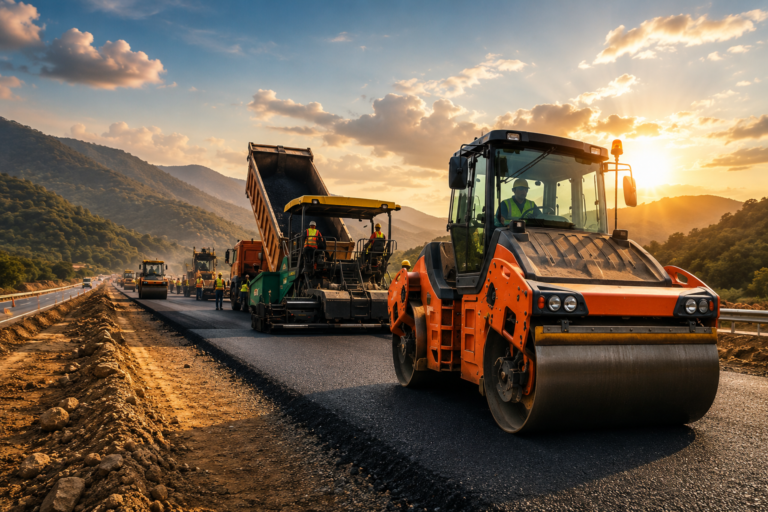
A more established application is machine control, where positioning systems, sensors and digital terrain information help guide equipment to a specified grade or alignment.
The Ministry of Road Transport and Highways has developed an Automated & Intelligent Machine-aided Construction (AIMC) framework for highway projects. The framework includes GPS-aided motor graders, intelligent compaction rollers and stringless pavers. (morth.nic.in)
MoRTH’s technical requirements specify an RTK base station for real-time correction of GPS signals used by the grader. The framework states that RTK can improve positioning accuracy from metres to centimetres and specifies a minimum GNSS position-update rate of 20 Hz. (morth.nic.in)
The distinction is important. Machine control provides digital guidance and positioning; it does not automatically make the machine autonomous.
Compaction is another area where machine data is being brought into the construction process.
The MoRTH AIMC framework includes intelligent compaction rollers, linking compaction operations with positioning and machine data. (morth.nic.in)
NHAI’s March 2026 publication also identified AIMC, Drone Analytics and Management Systems, Mobile Quality Control Vans and Network Survey Vehicles among technologies being used in highway construction and maintenance. (nhai.gov.in)
The development is significant because digital information is increasingly being used alongside conventional site equipment. Surveying, quality control and machine operation can be connected within the same project workflow.
Artificial intelligence is already being used in defined construction-equipment applications.
JCB’s IntelliSense is one example. JCB says the system uses AI to detect pedestrians in areas of risk and alert the machine operator. LiveLink can also record near-miss information and video for later review. (jcb.com)
This is AI-assisted operator support, not autonomous machine operation.
That distinction should remain clear when assessing construction technology. AI can perform a specific detection or analysis task without taking control of the entire machine.
More advanced systems are being developed to allow machines to perform defined construction tasks with less direct operator intervention.
Komatsu’s Smart Construction platform combines 3D design data, aerial mapping and machine information. Its portfolio includes 3D Machine Guidance, Intelligent Machine Control, Fleet and Remote solutions. (komatsu.com)
In March 2026, Komatsu announced a strategic partnership with AIM Intelligent Machines focused on autonomous operation of bulldozers and hydraulic excavators. Komatsu said the proposed system would combine Smart Construction work plans and terrain information with AIM’s physical-AI platform. The companies said the technology is intended to allow machines to determine construction methods and travel routes and carry out tasks autonomously. They also said the system can be retrofitted to existing bulldozers and hydraulic excavators. (komatsu.com)
This is a different level of automation from machine guidance. The machine is intended to execute the work rather than simply provide digital assistance to an operator.
Connectivity is also creating a software layer around construction equipment.
Volvo CE’s connected-solutions portfolio includes Connected Map, which provides visibility of machines, personnel and vehicles on a jobsite. Volvo CE says more than 170,000 machines are connected to its systems globally. (volvoce.com)
This type of system changes how equipment can be monitored and managed. Machine data can be viewed alongside information about people and other assets on a site rather than remaining inside an individual machine.
For larger contractors, the objective is less about connectivity for its own sake and more about having a consistent view of equipment and site operations.
The move towards electric equipment is also increasing the importance of site-level systems.
In May 2026, Volvo CE and Hitachi Energy signed a memorandum of understanding covering power supply, charging solutions, energy management and operational integration for zero-emission construction sites. (volvoce.com)
The development shows why electrification cannot be viewed only as a machine specification. Electric equipment also requires suitable charging and power infrastructure, together with systems to manage that energy.
For site operators, that makes power availability and charging arrangements part of equipment planning.
The most established smart-equipment applications are already practical.
Telematics provides information on utilisation, location and maintenance. Machine control links equipment with positioning and digital construction data. Intelligent compaction brings machine and positioning information into roadwork. AI is being applied to specific tasks such as pedestrian detection, while autonomous systems are being developed for more complex machine operations.
The technologies are at different stages of maturity. A connected excavator, an intelligent roller and an autonomous dozer should not be treated as equivalent levels of automation.
For fleet managers and contractors, the useful question is what a particular system improves. The relevant measures can include machine utilisation, maintenance planning, grading accuracy, compaction control, operator safety or fleet visibility.
India’s highway sector provides a clear example of this shift. MoRTH and NHAI are already working with machine-aided construction, digital surveying and related site technologies. (morth.nic.in)
Smart construction equipment is therefore developing in stages: first connecting the machine, then connecting it to the jobsite, and in some applications using AI and automation to influence how the machine performs the work.