China has announced export controls on TBMs and specified components from 18 November 2026. India’s treatment is not identified in the announcement.

China has announced export controls on TBMs and specified components from 18 November 2026. India’s treatment is not identified in the announcement.
China announced export controls on tunnel boring machines (TBMs) and specified components on 19 October 2026, effective from 18 November. The measure creates a new procurement checkpoint for contractors assessing Chinese-origin tunnelling equipment and spares.
MOFCOM and the General Administration of Customs’ Announcement No. 50 of 2026 covers shield and rock TBMs, designated cutterheads and tools, screw conveyors, segment erectors, main-drive systems and remanufacturing technology. Certain walking excavators and high-altitude wet-shotcrete equipment are also covered.
Exports to sensitive countries and regions in dispute with China require permission. Other destinations use registration and export documentation, with commitments restricting onward transfer. The announcement does not name the sensitive destinations or specify India’s treatment. It should not be read as a blanket global export ban.
In a separate 19 October explanation, the ministry cited dual-use considerations and said compliant licence applications would be approved. That statement does not establish an approval timeline for any particular shipment.
Equipment Brief analysis: procurement teams should assess the operating fleet alongside planned machine purchases. A project may have its TBM on site while relying on later component deliveries to maintain availability. A review limited to new-machine orders could therefore miss an important supply interface.
The useful exercise is to map each critical item to its origin, supplier, intended end user and planned shipping date. Contractors can then ask exporters to explain the applicable classification and documentation route in writing. A machine-level assurance should not substitute for checking separately ordered spares or assemblies.
For Indian metro and tunnel contractors, the question is whether a shipment’s compliance process fits the construction programme. Equipment Brief’s coverage of DMRC’s Central Vista shield-TBM package illustrates why equipment sourcing and underground civil procurement need to be assessed together; that coverage does not establish any impact from the new Chinese measure.
For buyers evaluating orders ahead of the effective date, Equipment Brief suggests four practical checks:
These are procurement considerations, not evidence that a particular Indian shipment has been delayed. Equipment Brief has not verified a project-specific delay or an India-wide licensing determination.
The next useful evidence would be destination-specific clarification, exporters’ documented procedures and confirmed shipment outcomes. Until then, the strongest conclusion is that contractors need a documented sourcing review, rather than an assumed ban or an assumed exemption. For wider plant interfaces, see our guide to equipment used in metro and rail construction.
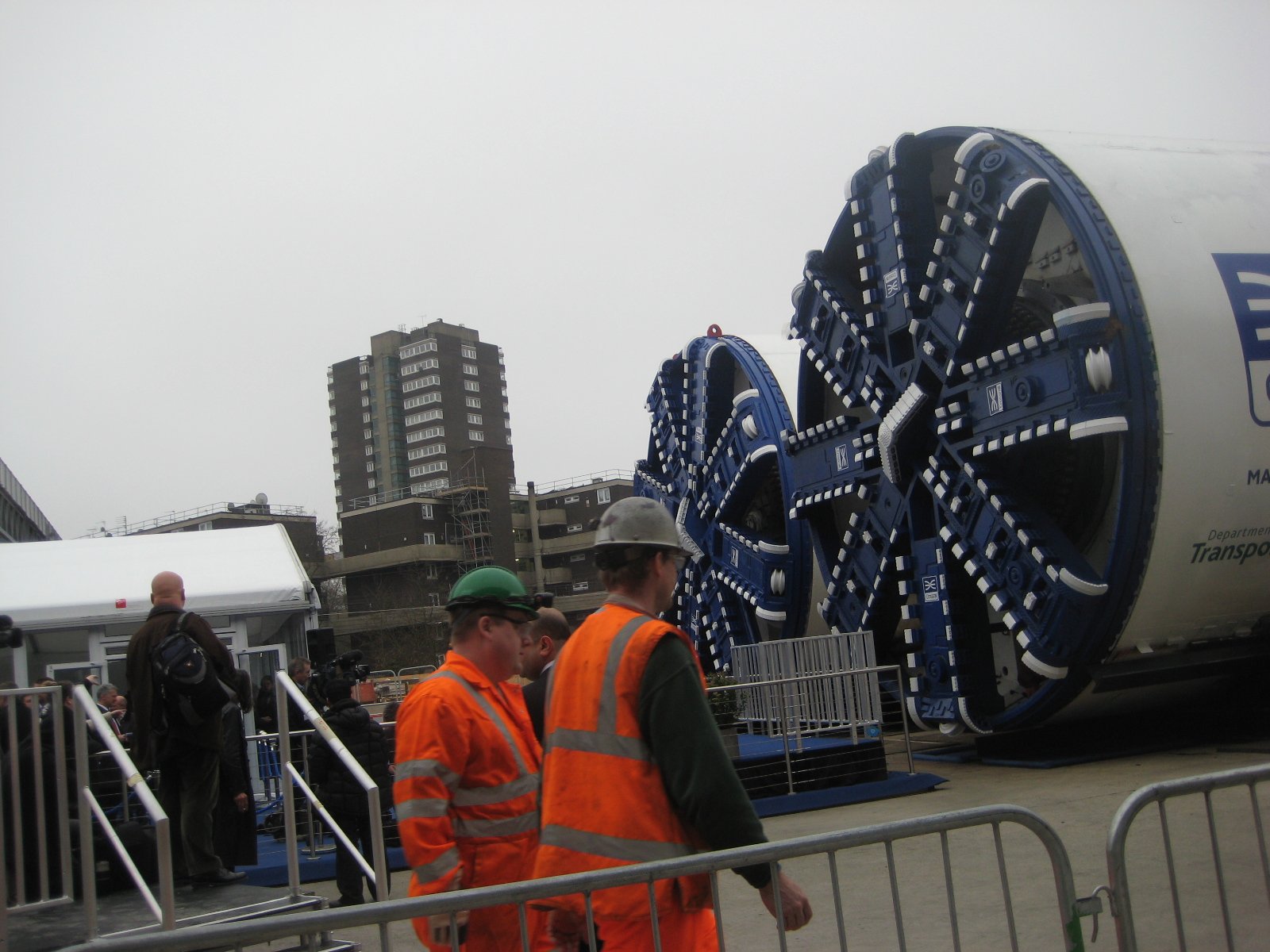
Featured photograph: tunnel boring machines at Crossrail’s Royal Oak launch in London, 13 March 2012, by Annie Mole, via Wikimedia Commons, CC BY 2.0. Representative archive photograph, not a Chinese export shipment or evidence that these machines fall under the announced controls. Displayed to fit the page. Reporting checked on 20 October 2026.