The Procore–NVIDIA integration aims to connect 3D models with site, schedule and procurement information. It remains in closed beta, with no general-release date or measured project savings disclosed in the announcement.

The Procore–NVIDIA integration aims to connect 3D models with site, schedule and procurement information. It remains in closed beta, with no general-release date or measured project savings disclosed in the announcement.
Procore and NVIDIA have announced construction digital-twin capabilities intended to let project teams examine risks before they reach the site. The integration is in closed beta, a distinction that matters to contractors considering it for planning or procurement.
Announced at Groundbreak in Orlando on 21 October 2026, the development connects Procore’s Model Manager with Realism Mode, powered by NVIDIA Omniverse libraries. Procore describes a more realistic 3D environment for exploring how project changes and physical conditions could affect construction.
In its official release, Procore identifies three intended uses: comparing designs with reality-capture information, understanding the schedule effects of disruptions, and testing conditions such as extreme weather or the movement of crews and equipment.
The proposed connection between 3D models, schedules and procurement information is particularly relevant to installation planning. Procore also says imagery from DroneDeploy can inform comparisons between planned and actual site conditions.
The release gives no general-availability date, published price or independently measured reduction in rework or delay. A customer statement from data-centre operator Switch describes the potential of 3D visualisation; it should not be read as proof of quantified results from this closed-beta integration.
Equipment Brief analysis: a realistic model becomes useful when it helps a site team make a decision. For equipment-intensive projects, that decision might concern access for a heavy delivery, space around a crane position or the sequence for installing plant before an opening is closed.
Consider an illustrative installation sequence in which a large component must enter a building before nearby structural work restricts access. The useful test is whether the model connects the component’s dimensions and delivery date with available access and the construction programme. If delivery slips, the team needs to see which later activities must move.
That is a planning example, not a documented Procore customer deployment. It also shows why visual quality alone cannot establish that a simulation is accurate. A convincing rendering can still contain an outdated programme, incomplete temporary works or the wrong equipment envelope.
Contractors evaluating a digital twin should begin with model ownership. Who maintains the construction model as design changes arrive? Which schedule revision controls the simulation? How are field deviations captured and approved?
Temporary conditions deserve particular attention. Working platforms, laydown areas, delivery routes and unfinished structures change during construction. A model that represents only the completed asset may miss the constraints that determine how it can be built.
The same applies to equipment. A generic crane symbol is not a lifting plan. Reach, configuration, ground support, clearances and the approved method still require competent engineering review. Scenario tools can support that review, but a software demonstration should not be treated as approval to perform the work.
For an Indian EPC contractor, a contained pilot is easier to assess than an attempt to model every site decision. Choose one congested work area or one critical equipment installation, define the decision to be made and agree what would count as an improvement.
On data-centre projects, site readiness extends beyond the structure. Equipment Brief’s report on the NITI Aayog data-centre evaluation framework covers power, water and infrastructure dependencies. Those physical constraints help define the questions a project model should address.
Prospective users should confirm beta access, supported formats, hardware requirements, integration responsibilities and contractual support. They should also ask which capabilities are available in the proposed release and which remain on the roadmap.
For equipment suppliers, the opportunity is to provide reliable planning information: machine dimensions, operating envelopes, access requirements and installation dependencies. The quality of those inputs may matter more than adding another visual representation of the machine.
Equipment Brief’s coverage of Hitachi’s excavator AI research provides another example of why development announcements need to be separated from commercial deployment. Here, the milestone is a closed beta. Wider access and evidence from completed project decisions are the next developments to watch.
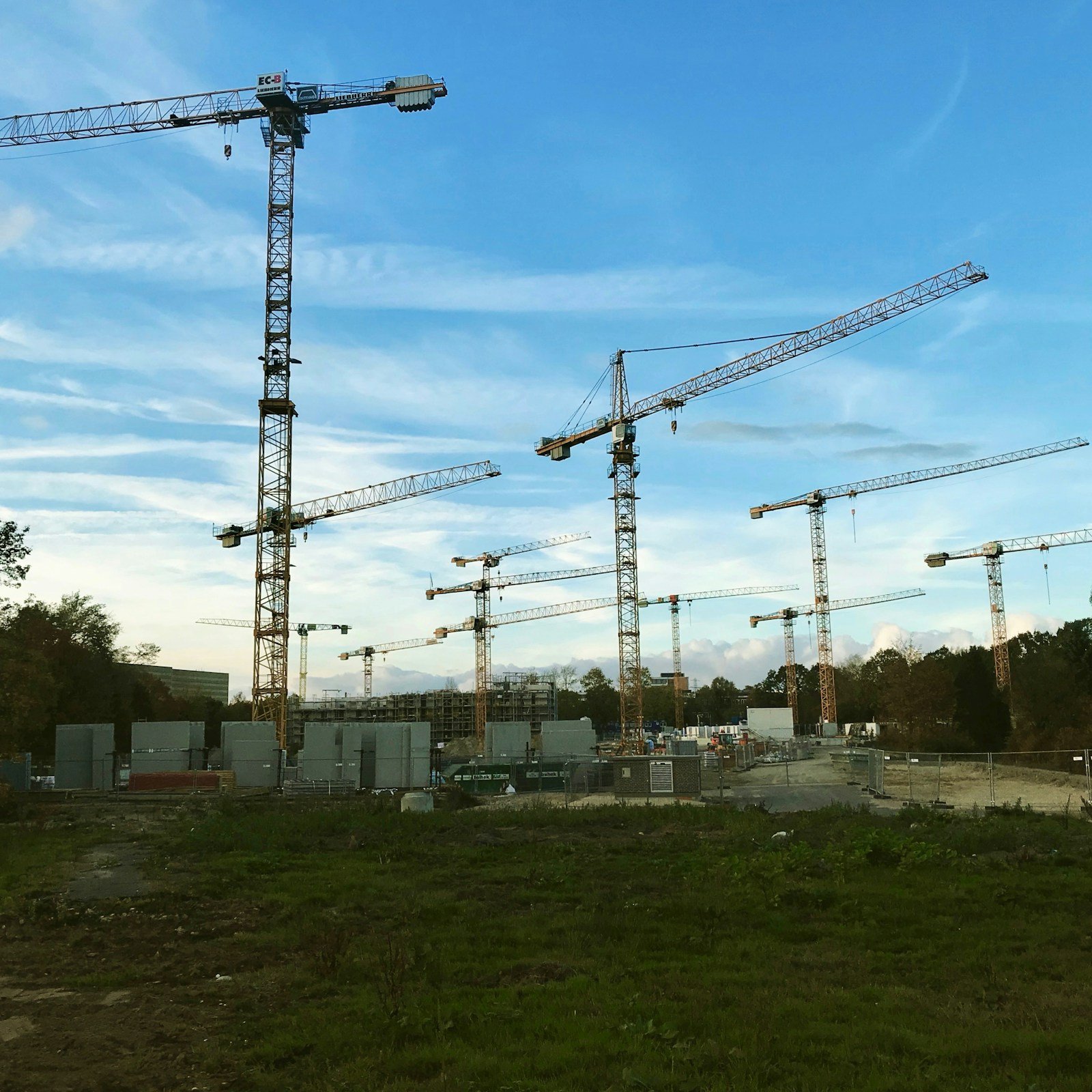
Featured photograph: Gerrit Schwerzel / Unsplash, used under the Unsplash licence. Representative construction-site photograph, not a Procore or NVIDIA customer deployment.