NHIDCL has moved the ₹7,642.20 crore Assam NH-15 BOT-Toll tender deadline to 30 November 2026, with technical opening on 1 December.

NHIDCL has moved the ₹7,642.20 crore Assam NH-15 BOT-Toll tender deadline to 30 November 2026, with technical opening on 1 December.
NHIDCL has extended the bid deadline for its ₹7,642.20 crore Assam NH-15 BOT-Toll tender from 21 October to 30 November 2026. Corrigendum-II, published on 15 October, also moves technical bid opening to 1 December.
The latest dates appear on the Central Public Procurement Portal corrigendum record. The underlying tender record now shows bid submission ending at 3:00 pm on 30 November and opening at 3:00 pm on 1 December.
Procurement status: open tender
This is a deadline extension, not an L1 result, letter of award, concession agreement, work order or mobilisation notice. No private concessionaire has been identified in the cited procurement record.
2026_NHIDC_921000_1Corrigendum-II is the second date change. The original submission deadline was 5 October. Corrigendum-I moved it to 21 October, and the new corrigendum replaces that date with 30 November. Bidders and suppliers should therefore discard calendars or alerts still showing 5 October or 21 October.
The procurement title covers construction of a four-lane highway from Baihata Chariali near Guwahati to Tezpur along NH-15, excluding the Mangaldoi Bypass. It identifies the limits as chainage 0+000 to 150+971, with the bypass section from 28+500 to 42+590 excluded.
A Cabinet Committee on Economic Affairs announcement describes the approved Guwahati–Tezpur corridor as a 135.87 km, four-lane, access-controlled project. The government says the approved scope includes five major bypasses totalling 58.7 km, 15 major bridges, 30 minor bridges, 19 flyovers, 46 underpasses, an elephant underpass and 210 km of service roads. A 4.9 km emergency landing facility is planned on the Tezpur Bypass.
Those project-level figures explain the construction intensity, but bidders should rely on the RFP, draft concession agreement and technical schedules for package obligations and quantities.
The CCEA release gives a total capital cost of ₹8,970.20 crore for the approved corridor. The active tender portal gives a tender value of ₹7,642.20 crore. Equipment Brief is using the lower figure when referring specifically to this procurement and the higher figure only for the Cabinet-approved project cost.
Neither amount is an awarded contract value. Competitive procurement is still open, and the final commercial position will depend on evaluation, selection of a concessionaire and execution of the concession agreement.
This package is not a conventional item-rate or EPC-only road contract. Under BOT Toll, the selected private concessionaire is expected to finance, build, operate and maintain the highway under the concession framework, while collecting toll revenue subject to the agreement.
For equipment suppliers and rental companies, that distinction affects timing. Early enquiries may come from prospective bidders and their technical partners, but they are not the same as firm purchase orders. Vendors should check who has won, whether the concession agreement has been signed, whether financial close and appointed-date conditions have been met, and what work will be self-performed before reserving project-specific fleet.
Equipment Brief’s guide to L1 versus LoA in Indian works tenders explains why even the lowest-bidder stage should not be treated as mobilisation.
The project announcement points to demand across large-scale highway earthworks, structures and pavement construction. Depending on the eventual design and construction programme, relevant equipment groups may include:
The public notice does not specify machine brands, capacities or quantities. Vendors should avoid turning the project cost into assumed fleet demand. The technical schedules, construction methodology, material-source plan and subcontract strategy will determine the real requirement.
For a broader view of highway fleet roles, see Equipment Brief’s guide to road construction equipment in India. The corridor’s planned elephant underpass also makes the distinction between completed and proposed mitigation relevant; Equipment Brief has separately reviewed wildlife-mitigation structures on national highways.
As verified on 16 October 2026, the controlling submission deadline is 30 November at 3:00 pm, followed by technical opening on 1 December. Equipment Brief will monitor the procurement record for further amendments and the eventual tender result.
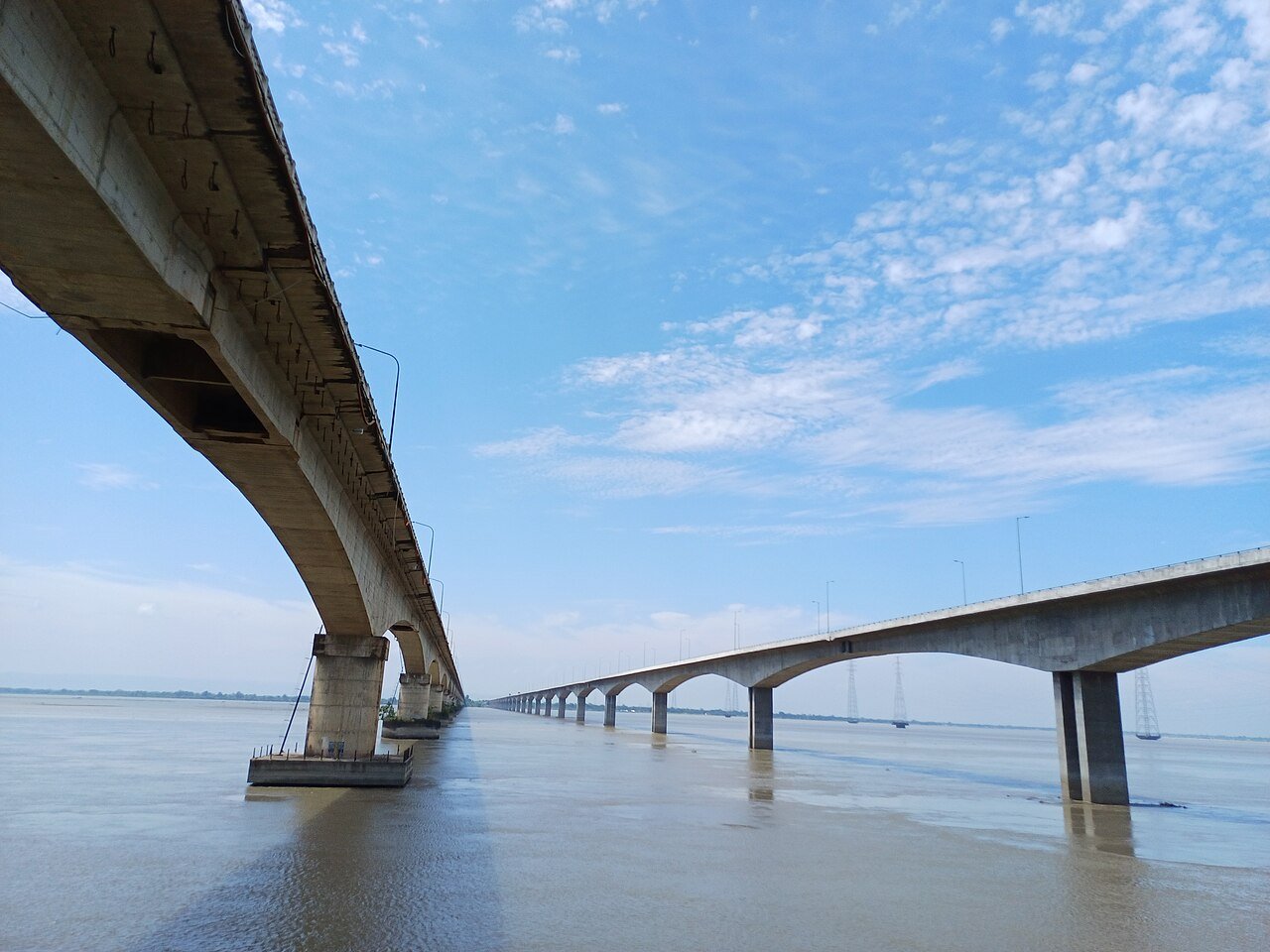
Featured image: Kolia Bhomora Setu on the Tezpur side, Assam. Photo by Nayan j Nath via Wikimedia Commons, licensed under CC BY 4.0. The photograph is illustrative of the Tezpur area and does not depict construction under this tender.