NHAI says about ₹19,700 crore has been invested over five years in wildlife mitigation and environmental safeguards, with more than 2,150 structures constructed and/or proposed.

NHAI says about ₹19,700 crore has been invested over five years in wildlife mitigation and environmental safeguards, with more than 2,150 structures constructed and/or proposed.
New Delhi, October 8, 2026: The National Highways Authority of India (NHAI) says around ₹19,700 crore has been invested over the past five years in wildlife-mitigation infrastructure and related environmental safeguards across National Highway projects, as highway planning increasingly incorporates animal crossings, viaducts, tunnels, fencing and other protection measures.
NHAI released a new document on “Wildlife Mitigation Measures & Structures” during National Wildlife Week, stating that more than 2,150 wildlife-mitigation structures have been constructed and/or proposed along National Highways across the country.
The figures cover a mix of completed and planned interventions. They should therefore not be read as 2,150 already-completed structures or as a single current procurement programme.
NHAI says mitigation planning is based on ecological sensitivity, wildlife-movement patterns and the technical feasibility of infrastructure design for individual highway corridors.
The structural measures cited by the authority include animal underpasses and overpasses, viaducts, tunnels, major and minor bridges adapted for wildlife movement, culverts and canopy crossings. Non-structural measures include fencing, noise barriers, signage and speed regulation.
The objective is to reduce habitat fragmentation, barrier effects and wildlife-vehicle collisions while maintaining road connectivity and traffic movement.
Within the structural mitigation measures highlighted by NHAI, the authority reports around:
These figures are component-level amounts reported by NHAI within the broader five-year wildlife-mitigation and environmental-safeguard programme. Equipment Brief is not treating them as separate current tenders or awards.
Equipment Brief analysis: the mix shows that wildlife mitigation is not limited to fencing or signage. On ecologically sensitive corridors, it can materially alter highway geometry, bridge and viaduct scope, tunnel requirements and the civil-works package itself.
NHAI’s document says more than 2,150 wildlife-mitigation structures have been constructed and/or proposed nationwide.
The list includes Animal Under Passes, major and minor bridge-cum-animal-underpass structures, culverts adapted for faunal movement, canopy crossings and other specialised structures.
The wording is important: NHAI has combined completed and proposed measures in this total. The release does not provide a nationwide split between structures already completed, under construction and still at proposal stage.
For contractors and consultants, that means the 2,150 figure is best read as the scale of NHAI’s mitigation portfolio rather than a measure of completed civil works.
NHAI says guide fencing and noise barriers have been provided along more than 300 km of National Highway alignments to direct animals towards designated crossings and reduce disturbance.
The authority also uses camera trapping to monitor wildlife movement and assess mitigation measures. Wildlife-vehicle collision hotspots are identified for interventions such as speed-regulation boards and signage.
Other measures cited include reptile crossings, rainwater harvesting and additional wildlife-management interventions suited to specific corridors.
Equipment Brief analysis: incorporating wildlife mitigation earlier in project planning can affect DPR preparation, alignment design, geotechnical investigation, structural engineering, quantities and construction sequencing.
Animal underpasses and bridge-integrated crossings can require excavation, piling or foundation systems, structural concrete, lifting and formwork. Long viaduct sections can increase demand for foundation equipment, cranes, launching systems and concrete production and placement. Tunnel sections can bring in specialist excavation, drilling, ventilation, muck-handling and support systems depending on geology and the selected construction method.
Actual equipment requirements vary by project and should not be inferred from NHAI’s national investment totals. The important industry signal is that ecological mitigation is increasingly part of the engineered scope of highway packages rather than an isolated add-on after construction.
For broader road-construction context, Equipment Brief’s guide to road-construction equipment explains the main machinery classes used across highway earthworks, pavement, structures and finishing operations.
Wildlife crossings can add structures and specialised works to a highway package, while environmental and wildlife clearances can also influence the project-development schedule.
NHAI’s stated approach is to incorporate mitigation at different stages of National Highway development so connectivity requirements can be balanced with biodiversity conservation and statutory environmental compliance.
That has implications for contractors bidding on projects through or near sensitive habitats. The final construction scope may include mitigation structures whose cost, method and programme requirements need to be incorporated into project planning from the outset.
Equipment Brief is also tracking major NHAI procurement such as the Hyderabad–Vijayawada NH-65 six-laning tender, where project scope and construction method need to be read separately from later bid, L1 and award stages.
NHAI’s new document provides a national reference framework, but the commercial opportunity for contractors and equipment suppliers will continue to emerge at individual-project level through DPRs, tender documents, environmental-clearance conditions and construction packages.
The next useful layer of reporting will be project-specific: where major animal underpasses, overpasses, viaducts or tunnels are being tendered, their dimensions and construction methods, and whether mitigation requirements materially change package values or delivery schedules.
Sources: Ministry of Road Transport & Highways / PIB, 8 October 2026; NHAI, Wildlife Mitigation Measures & Structures.
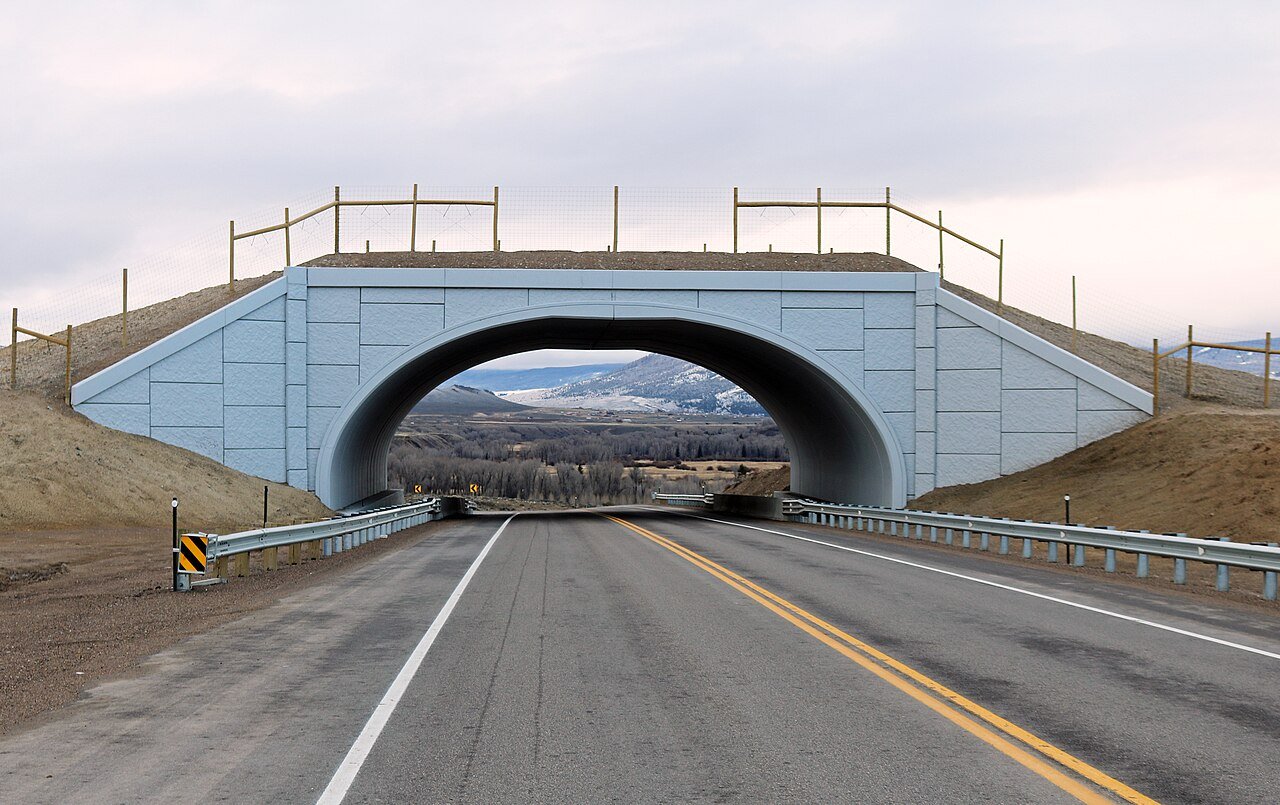
Featured image: Wildlife overpass on Colorado State Highway 9, United States, photographed by Jeffrey Beall / Wikimedia Commons, licensed under CC BY 4.0. Cropped/resized for this page. Representative photograph; it does not depict an NHAI project.